
Yeast Infection
What is Yeast Infection ?
A vaginal yeast infection is a fungal infection. It causes irritation, discharge and itching of the vagina and the vulva. Vaginal yeast infection also is called vaginal candidiasis. Vaginal yeast infection affects most people assigned female at birth at some point in life. Many have at least two infections. People who don’t have sex can get a vaginal yeast infection. So it isn’t thought of as a sexually transmitted infection. But you can get vaginal yeast infections through sex.
There’s a higher risk of vaginal yeast infection when you start having sex. And some vaginal yeast infections may be linked to sexual contact between the mouth and genital area, called oral-genital sex. Medicines can treat vaginal yeast infections. Yeast infections that occur four times or more a year may require a longer treatment course and a plan to prevent recurrence.
Symptoms
- Itching and irritation in the vagina and vulva
- A burning feeling
- Redness and swelling of the vulva
- Vaginal pain and soreness
- Thick, white vaginal shedding of fluid and cells
- Small cuts or tiny cracks in the skin of your vulva
- Burning when you pee
- Pain during sex
- Fatigue
- Digestive issues
Cause
The fungus Candida albicans causes most vaginal yeast infections. Most often, the vagina has a balance of yeast, including candida, and bacteria. Certain bacteria called lactobacillus work to prevent too much yeast. But some factors can affect the balance. Too much candida or the fungus growing deeper into vaginal cells causes symptoms of a yeast infection. Too much yeast can result from antibiotic use, pregnancy, diabetes that isn’t well-managed, a weakened immune system, use of birth control pills, or hormone therapy that raises levels of the hormone estrogen. Candida albicans is the most common type of fungus to cause yeast infections. When other types of candida fungus cause yeast infections, they can be harder to treat.
Risk Factors
Factors that raise the risk of getting a yeast infection include: Antibiotic use. Yeast infections are common in people who take antibiotics. Broad-spectrum antibiotics kill a range of bacteria. They also kill healthy bacteria in the vagina. This can lead to excessive yeast growth. Raised estrogen levels. Yeast infections are more common in people with higher estrogen levels. Pregnancy, birth control pills, and hormone therapy can raise estrogen levels. Diabetes that isn’t well-managed. People with poorly managed blood sugar are at greater risk of yeast infections than are people with well-managed blood sugar. Weakened immune system. People with lowered immunity are more likely to get yeast infections. Lower immunity might be from corticosteroid therapy or HIV infection, or other diseases that suppress the immune system.
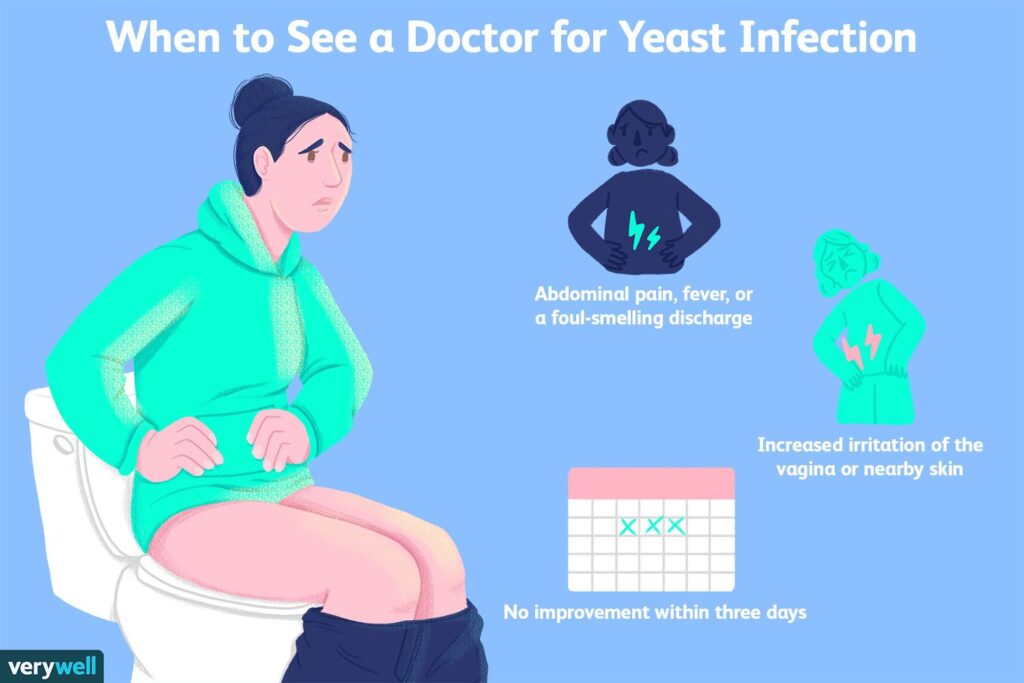
When to see a Doctor
Make an appointment with your healthcare professional if this is the first time you’ve had symptoms of a yeast infection. You’re not sure whether you have a yeast infection. Your symptoms don’t go away after you treat them with antifungal vaginal creams or suppositories that you can get without a prescription. You have other symptoms.