
Tonsillitis
What is Tonsillitis ?
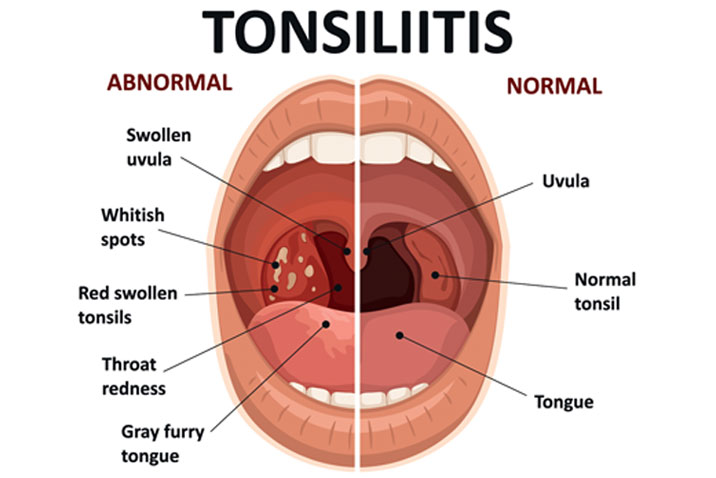
Tonsillitis is inflammation of the tonsils, two oval-shaped pads of tissue at the back of the throat — one tonsil on each side. Signs and symptoms of tonsillitis include swollen tonsils, sore throat, difficulty swallowing, and tender lymph nodes on the sides of the neck. Most cases of tonsillitis are caused by infection with a common virus, but bacterial infections also may cause tonsillitis.
Because appropriate treatment for tonsillitis depends on the cause, it’s important to get a prompt and accurate diagnosis. Surgery to remove tonsils, once a common procedure to treat tonsillitis, is usually performed only when tonsillitis occurs frequently, doesn’t respond to other treatments, or causes serious complications.
Symptoms
- Red, swollen tonsils
- White or yellow coating or patches on the tonsils
- Sore throat
- Difficult or painful swallowing
- Fever
- Enlarged, tender glands in the neck
- A scratchy, muffled or throaty voice
- Bad breath
- Stomachache
- Neck pain or stiff neck
- Headache
- Drooling due to difficult or painful swallowing
Cause
Tonsillitis is most often caused by common viruses, but bacterial infections can also be the cause. The most common bacterium causing tonsillitis is Streptococcus pyogenes (group A streptococcus), the bacterium that causes strep throat. Other strains of strep and other bacteria also may cause tonsillitis. The tonsils are the immune system’s first line of defense against bacteria and viruses that enter your mouth. This function may make the tonsils particularly vulnerable to infection and inflammation. However, the tonsil’s immune system function declines after puberty — a factor that may account for the rare cases of tonsillitis in adults.
Risk Factors
Risk factors for tonsillitis include: Young age. Tonsillitis most often affects children, and tonsillitis caused by bacteria is most common in children ages 5 to 15. Frequent exposure to germs. School-age children are in close contact with their peers and frequently exposed to viruses or bacteria that can cause tonsillitis.
When to see a Doctor
It’s important to get an accurate diagnosis if your child has symptoms that may indicate tonsillitis.