
Swimmer's Ear
What is Swimmer's Ear ?
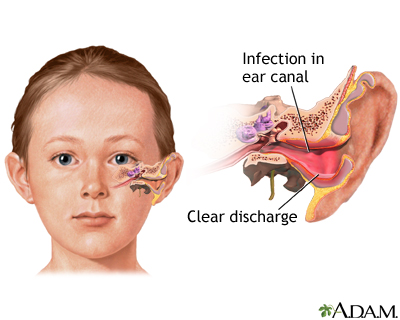
Swimmer’s ear is an infection in the outer ear canal. The outer ear canal runs from the eardrum to the outside of the head. Swimmer’s ear is often brought on by water that stays in the ear. The moisture helps bacteria grow.
Putting fingers, cotton swabs, or other objects in the ears can damage the thin layer of skin lining the ear canal. This can also lead to swimmers’ ear. Swimmer’s ear is also called otitis externa. Ear drops usually can treat swimmer’s ear. Treating swimmer’s ear quickly can help prevent complications and more serious infections.
Symptoms
- Itching in the ear canal
- Slight redness inside the ear
- Fluid coming from the ear
- Worse itching
- Increasing pain
- Feeling of fullness inside the ear
- Decreased or muffled hearing
- Severe pain
- Completely blocked ear canal
- Redness or swelling of the outer ear
- Swollen lymph node
- Fever
Cause
Many things can cause swimmer’s ear, but activity that traps water in your ear canal is the most common cause. Bacteria and fungi thrive in warm, moist places. So, water pooling in your ear canal is the perfect environment for bacteria and fungi to settle in, start multiplying, and eventually cause infection. It’s much more common to get swimmer’s ear from a bacterium than a fungus. In rare cases, a combination of pathogens (germs that make you sick) can cause swimmers’ ear. Bacteria that can cause swimmer’s ear include Pseudomonas aeruginosa and Staphylococcus aureus. Fungi that can cause the condition include Candida and Aspergillus.
Risk Factors
The following can increase the risk of swimmer’s ear: Water in the ear canal. This can be from heavy sweating, ongoing humid weather, or water left in the ear after swimming. Contact with bacteria in water. Cleaning the ear canal with cotton swabs, hairpins, or fingernails. This can lead to scratches or sores. Ear devices, such as earbuds or hearing aids. These can cause tiny breaks in the skin. Eczema or other itchy skin conditions.
When to see a Doctor
Make an appointment to get medical help for even mild symptoms of swimmer’s ear. Get urgent medical help or go to an emergency room for severe pain or fever.