
Spondylitis
What is Spondylitis ?
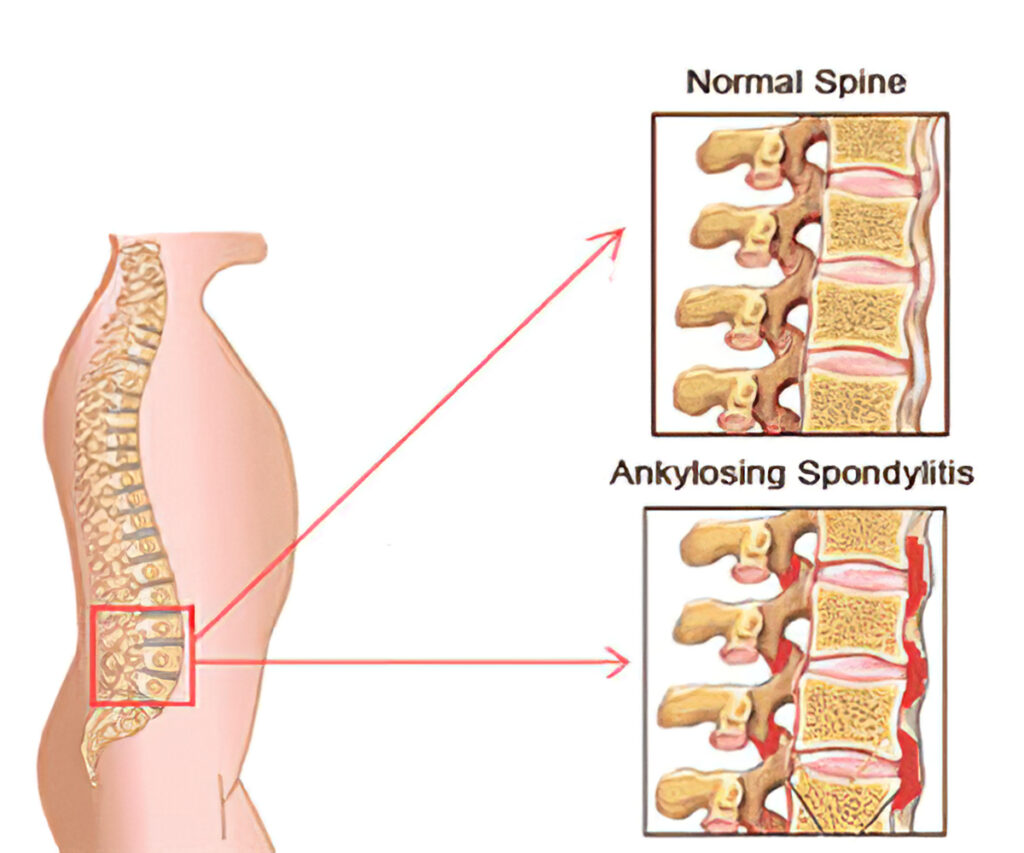
Ankylosing spondylitis, also known as axial spondyloarthritis, is an inflammatory disease that, over time, can cause some of the bones in the spine, called vertebrae, to fuse. This fusing makes the spine less flexible and can result in a hunched posture. If ribs are affected, it can be difficult to breathe deeply.
Axial spondyloarthritis has two types. When the condition is found on X-ray, it is called ankylosing spondylitis, also known as axial spondyloarthritis. When the condition can’t be seen on X-ray but is found based on symptoms, blood tests, and other imaging tests, it is called nonradiographic axial spondyloarthritis.
Symptoms typically begin in early adulthood. Inflammation can also occur in other parts of the body, most commonly, the eyes. There is no cure for ankylosing spondylitis, but treatments can lessen symptoms and possibly slow the progression of the disease.
Symptoms
- Hip pain
- Pain in your butt
- Neck pain
- Abdominal pain
- Fatigue
- Shortness of breath
- Losing your appetite
- Diarrhea
- Skin rashes
- Vision problems
Cause
Ankylosing spondylitis is an autoimmune disease. Autoimmune diseases happen when your immune system attacks your body instead of protecting it. Experts aren’t certain what causes ankylosing spondylitis. Studies have found that specific genetic mutations are closely linked to having AS. Genetic mutations are changes to your DNA sequence that happen when your cells divide to make copies of themselves. There are more than 60 mutated genes that might cause AS. One example is the human leukocyte antigen-B (HLA-B27) gene. More than 90% of white people who have AS also have a mutated HLA-B27 gene.
Risk Factors
Anyone can develop ankylosing spondylitis, but certain groups of people are more likely to have it, including people younger than 40 (more than 80% of people with AS are diagnosed when they’re around 30). Males. People who have a close biological relative with AS (especially a biological parent). People with certain health conditions are more likely to have ankylosing spondylitis, including Crohn’s disease, ulcerative colitis, and psoriasis.
When to see a Doctor
Seek medical attention if you have low back or buttock pain that came on slowly, is worse in the morning, or awakens you from your sleep in the second half of the night, particularly if this pain improves with exercise and worsens with rest. See an eye specialist immediately if you develop a painful red eye, severe light sensitivity, or blurred vision.