
Sjögren’s Syndrome
What is Sjögren’s Syndrome ?
Sjogren’s (SHOW-grins) syndrome is a disorder of your immune system identified by its two most common symptoms — dry eyes and a dry mouth.
The condition often accompanies other immune system disorders, such as rheumatoid arthritis and lupus. In Sjogren’s syndrome, the mucous membranes and moisture-secreting glands of your eyes and mouth are usually affected first — resulting in decreased tears and saliva. Although you can develop Sjogren’s syndrome at any age, most people are older than 40 at the time of diagnosis. The condition is much more common in women. Treatment focuses on relieving symptoms.
Symptoms
- Dry eyes or itchy eyes
- Dry mouth, mouth sores or thickened spit
- Vaginal dryness
- Dry skin
- Dry nose and frequent nosebleeds
- Dry throat
- Joint pain
- Muscle pain or weakness
- Swollen lymph nodes
- Fatigue
- Trouble swallowing or talking
- Brain fog
Cause
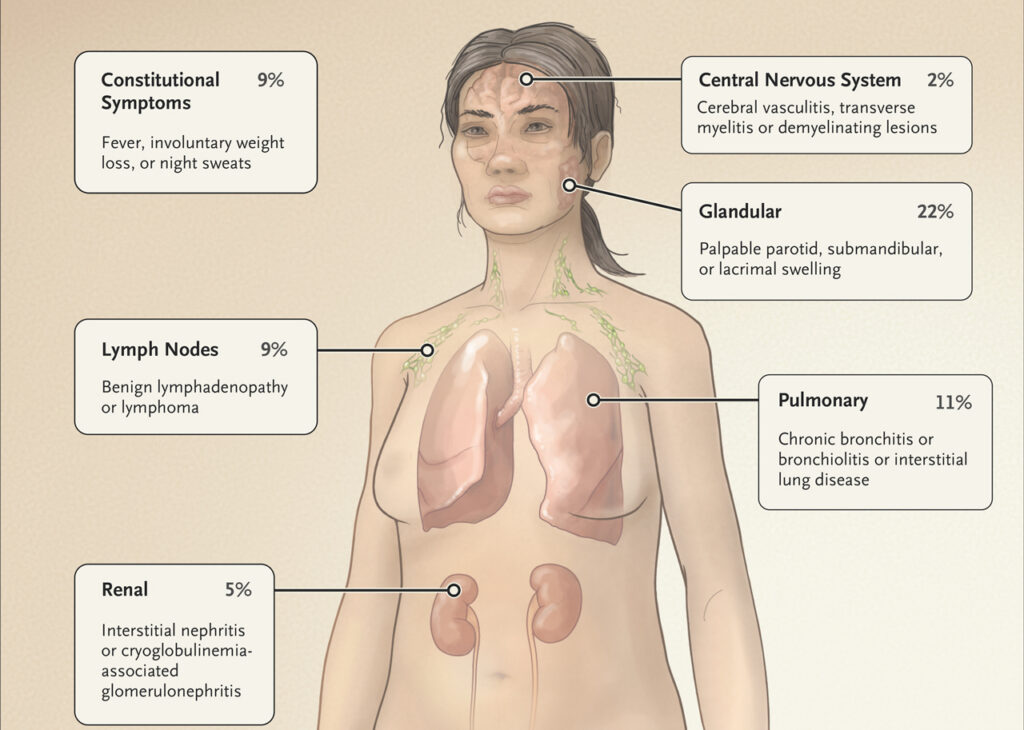
Sjogren’s syndrome is an autoimmune disorder. Your immune system mistakenly attacks your body’s own cells and tissues. Scientists aren’t certain why some people develop Sjogren’s syndrome. Certain genes put people at higher risk of the disorder, but it appears that a triggering mechanism — such as infection with a particular virus or strain of bacteria — is also necessary. In Sjogren’s syndrome, your immune system first targets the glands that make tears and saliva. But it can also damage other parts of your body, such as Joints, Thyroid, Kidneys, Liver, Lungs, Skin, Nerves.
Risk Factors
Sjogren’s syndrome typically occurs in people with one or more known risk factors, including Age, Sjogren’s syndrome is usually diagnosed in people older than 40. Sex, Women are much more likely to have Sjogren’s syndrome. Rheumatic disease, It’s common for people who have Sjogren’s syndrome to also have a rheumatic disease — such as rheumatoid arthritis or lupus.
When to see a Doctor
Make an appointment with your health care provider promptly if you have signs or symptoms of Sjögren’s Syndrome.