
Scoliosis
What is Scoliosis ?
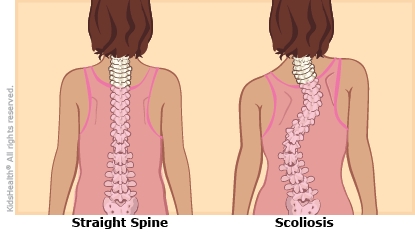
Scoliosis is a side-to-side curve of the spine. It’s most often diagnosed after age 10 or in the early teen years. The spine can curve to either side and in different parts of the back. Experts don’t know the cause of most childhood scoliosis. Most scoliosis is mild. But some curves get worse as children grow. If the curve gets very bad, scoliosis can cause pain and breathing problems. A bad curve of the spine can press on the lungs and make it hard to breathe.
Healthcare professionals watch growing children who have mild scoliosis with follow-up visits a few times a year. This most often involves X-rays and a physical exam to see if the curve is getting worse. Many people with scoliosis don’t need treatment. Some children may need to wear a brace to stop the curve from getting worse. Others may need surgery to correct the curves.
Symptoms
- Change in posture
- Shoulders that aren't even
- One shoulder blade that looks bigger than the other
- Waist that isn't even
- One hip higher than the other
- Core muscle weakness
- One side of the rib cage pushing forward
- One side of the back poking out when bending forward
- Head that doesn’t center above your pelvis
- Back pain
- Constant leaning to one side
- Uneven leg length
Cause
Experts don’t know what causes the most common type of scoliosis. But the condition can run in families. The following may cause some types of scoliosis in certain conditions of the muscles and nerves that let the body move, called neuromuscular conditions. Conditions include cerebral palsy or muscular dystrophy. Birth conditions that affect how the bones of the spine form. Surgery on the chest wall as a baby or surgery to remove bone over the back of the spine. Spinal cord conditions.
Risk Factors
Risk factors for getting the most common type of scoliosis include being age 10 or older. Symptoms most often begin in the early teen years. Being assigned female at birth. Both sexes get mild scoliosis at about the same rate. But people assigned female at birth have a higher risk of the curve getting worse and needing treatment. Having a family history. Scoliosis can run in families. But most children with scoliosis don’t have a family history of the condition.
When to see a Doctor
See your child’s healthcare professional if you see signs of scoliosis in your child. A mild curve might form slowly and not cause pain. You and your child might not know it’s there. Sometimes, teachers, friends and sports teammates are the first to notice a child’s scoliosis.