
Salmonella Infections
What is Salmonella Infections ?
Salmonella infection (salmonellosis) is a common bacterial disease that affects the intestinal tract. Salmonella bacteria typically live in animal and human intestines and are shed through stool (feces). Humans become infected most frequently through contaminated water or food.
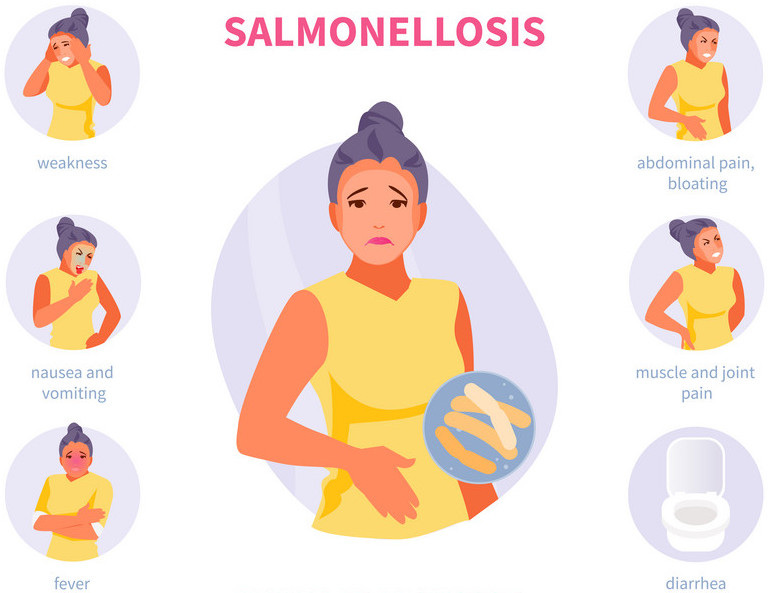
Some people with salmonella infection have no symptoms. Most people develop diarrhea, fever and stomach (abdominal) cramps within 8 to 72 hours after exposure. Most healthy people recover within a few days to a week without specific treatment. In some cases, diarrhea can cause severe dehydration and requires prompt medical attention. Life-threatening complications also may develop if the infection spreads beyond the intestines. The risk of getting salmonella infection is higher with travel to countries without clean drinking water and proper sewage disposal.
Symptoms
- Diarrhea
- Stomach (abdominal) cramps
- Fever
- Nausea
- Vomiting
- Chills
- Headache
- Blood in the stool
- Dehydration
- Dizziness
Cause
Salmonella poisoning is caused by the bacteria Salmonella. When more Salmonella bacteria get into your body than it can destroy, you get an infection that causes fever, diarrhea and other stomach (gastrointestinal) issues. Salmonella bacteria live in the guts of people and animals, but the things we eat, drink and touch can also be contaminated, including raw eggs and eggshells. Raw red meat, seafood and poultry. Fruits and vegetables. Unpasteurized milk or cheese. Untreated water. The fur, feathers, scales, skin and poop (feces) of animals and the places they live. Surfaces around someone who’s infected with Salmonella bacteria.
Risk Factors
Factors that may increase your risk of salmonella infection include activities that may bring you into closer contact with salmonella bacteria. Health problems that may weaken your resistance to infection in general. Salmonella infection, including varieties that cause typhoid fever, is more common in developing countries with poor sanitation. Some animals, particularly birds and reptiles, can carry Salmonella bacteria. Salmonella can also be found in animal pens, tanks, cages, and litter boxes. The body has many natural defenses against Salmonella infection. For example, strong stomach acid can kill many types of Salmonella bacteria. But some medical problems or medications can short-circuit these natural defenses. Lowering the stomach’s acidity allows more Salmonella bacteria to survive. This disorder damages the lining of your intestines, which makes it easier for Salmonella bacteria to take hold. This can reduce the number of “good” bacteria in your intestines, which may impair your ability to fight off a Salmonella infection.
When to see a Doctor
Most people don’t need to seek medical attention for salmonella infection because it clears up on its own within a few days. However, if the affected person is an infant, young child, older adult or someone with a weakened immune system, call a health care provider if illness lasts more than a few days. Is associated with high fever or bloody stools. Appears to be causing dehydration, with signs such as such as urinating less than usual, dark-colored urine and having a dry mouth and tongue.