
Psoriatic Arthritis
What is Psoriatic Arthritis ?
Psoriatic arthritis is a form of arthritis that affects some people who have psoriasis, a disease that causes red patches of skin topped with silvery scales. Most people develop psoriasis years before being diagnosed with psoriatic arthritis. But for some, the joint problems begin before skin patches appear or at the same time.
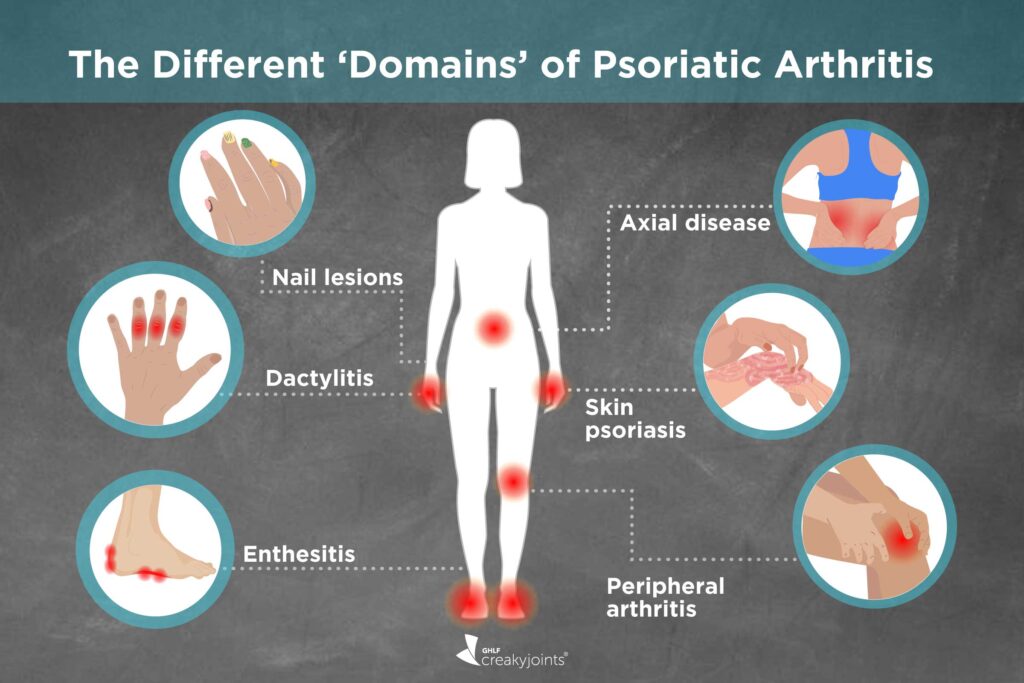
Joint pain, stiffness, and swelling are the main signs and symptoms of psoriatic arthritis. They can affect any part of the body, including your fingertips and spine, and can range from relatively mild to severe. In both psoriasis and psoriatic arthritis, disease flares can alternate with periods of remission. There’s no cure for psoriatic arthritis. Treatment is aimed at controlling symptoms and preventing joint damage. Without treatment, psoriatic arthritis can be disabling.
Symptoms
- Joint pain
- Stiffness
- Discoloration or redness near your affected joints
- Pain or tenderness
- Swelling in your fingers and toes
- Psoriasis rash
- Nail psoriasis
- Fatigue
- Foot pain
- Lower back pain
Cause
Psoriatic arthritis occurs when your body’s immune system attacks healthy cells and tissue. The immune response causes inflammation in your joints as well as overproduction of skin cells. It seems likely that both genetic and environmental factors play a role in this immune system response. Many people with psoriatic arthritis have a family history of either psoriasis or psoriatic arthritis. Researchers have discovered certain genetic markers that appear to be associated with psoriatic arthritis. Physical trauma or something in the environment, such as a viral or bacterial infection, might trigger psoriatic arthritis in people with an inherited tendency.
Risk Factors
Several factors can increase your risk of psoriatic arthritis, including: Psoriasis. Having psoriasis is the single greatest risk factor for developing psoriatic arthritis. Family history. Many people with psoriatic arthritis have a parent or a sibling with the disease. Age. Although anyone can develop psoriatic arthritis, it occurs most often in adults between the ages of 30 and 55.
When to see a Doctor
If you have psoriasis, tell your doctor if you develop joint pain. Psoriatic arthritis can severely damage your joints if left untreated.