
Parkinson's Disease
What is Parkinson's Disease ?
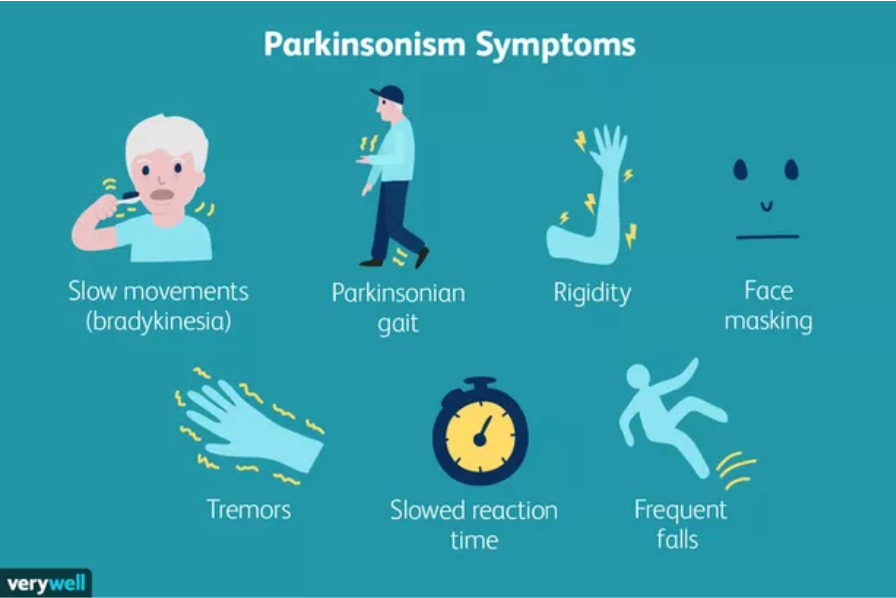
Parkinson’s disease is a movement disorder of the nervous system that worsens over time. The nervous system is a network of nerve cells that controls many parts of the body, including movement. Symptoms start slowly. The first symptom may be a barely noticeable tremor in just one hand or sometimes a foot or the jaw. Tremor is common in Parkinson’s disease. But the disorder also may cause stiffness, slowing of movement and trouble with balance that raises the risk of falls.
In the early stages of Parkinson’s disease, your face may show little or no expression. Your arms may not swing when you walk. Your speech may become soft or slurred. Symptoms get worse over time. Although Parkinson’s disease can’t be cured, medicines may help symptoms get better. Sometimes a healthcare professional may suggest surgery to help control parts of the brain. This surgery may help lessen symptoms.
Symptoms
- Tremor
- Slowed movement
- Rigid muscles
- Poor posture and balance
- Loss of automatic movements
- Mask-like facial expression
- Speech changes
- Writing changes
- Nonmotor symptoms
- Blinking less often than usual
- Drooling
- Trouble swallowing (dysphagia)
Cause
In Parkinson’s disease, nerve cells in the brain called neurons slowly break down or die. Many Parkinson’s disease symptoms are caused by a loss of neurons that produce a chemical messenger in the brain. This messenger is called dopamine. Decreased dopamine leads to irregular brain activity. This causes movement problems and other symptoms of Parkinson’s disease. People with Parkinson’s disease also lose a chemical messenger called norepinephrine that controls many body functions, such as blood pressure. The cause of Parkinson’s disease is unknown, but several factors seem to play a role. Specific genetic changes are linked to Parkinson’s disease. But these are rare unless many family members have had Parkinson’s disease. Exposure to certain toxins or other environmental factors may increase the risk of later Parkinson’s disease. One example is MPTP, a substance that can be found in illegal drugs and is sometimes sold illegally as “synthetic heroin.” Other examples include pesticides and well water used for drinking. But no environmental factor has proved to be a cause.
Risk Factors
Risk factors for Parkinson’s disease include Age. The risk of Parkinson’s disease increases with age. Usually, it starts around age 50 or older. The average age of onset is around age 70. Parkinson’s disease can occur in younger adults, but it is rare. When people younger than age 50 have the disease, it’s known as early-onset Parkinson’s disease. Genetics. Having one or more first-degree relatives, such as parents or siblings, with Parkinson’s disease increases your risk. Your risks are still small unless you have many blood relatives with the condition. Male sex. Men are more likely to develop Parkinson’s disease than women. Exposure to toxins. Ongoing exposure to herbicides and pesticides may slightly increase your risk of Parkinson’s disease.
When to see a Doctor
See a healthcare professional if you have any symptoms of Parkinson’s disease. This will help diagnose your condition and rule out other causes.