
Overactive Bladder
What is Overactive Bladder ?
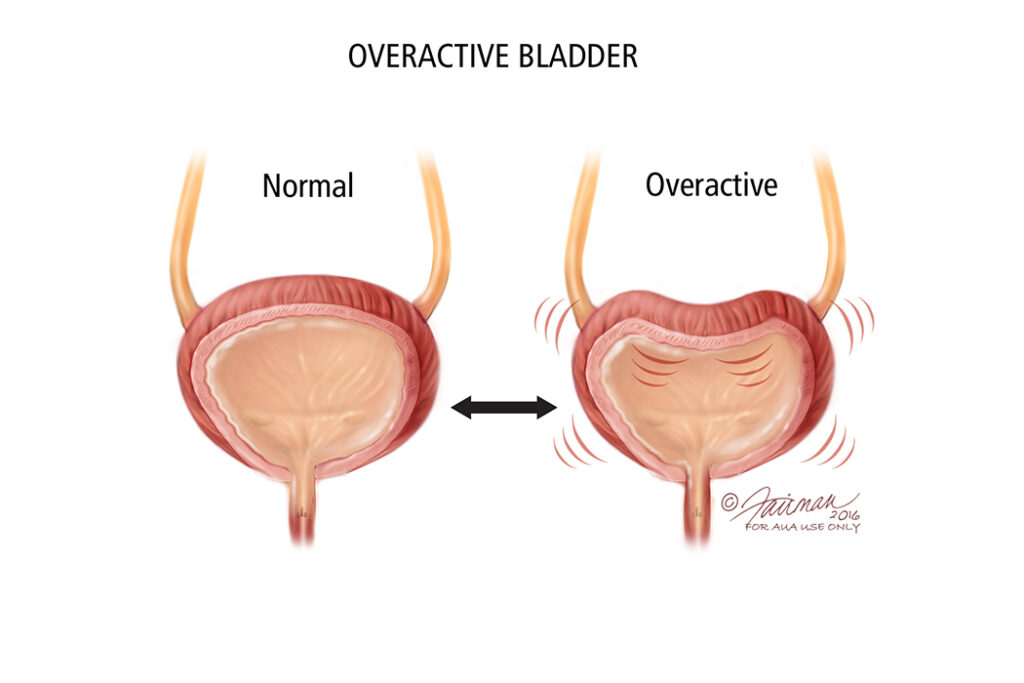
Overactive bladder, also called OAB, causes sudden urges to urinate that may be hard to control. There might be a need to pass urine many times during the day and night. There also might be loss of urine that isn’t intended, called urgency incontinence.
People with an overactive bladder might feel self-conscious. That can cause them to keep away from others or limit their work and social life. The good news is that it can be treated. Simple behavior changes might manage symptoms of an overactive bladder. These might include changes in diet, urinating on a certain schedule, and using pelvic floor muscles to control the bladder. There are also other treatments to try.
Symptoms
- Feel a sudden urge to urinate that's hard to control
- Urgency incontinence
- Urinate often
- Nocturia
- Frequent peeing
- Difficulty starting to pee
- Peeing that starts and stops unexpectedly
- Pain or discomfort in the lower abdomen
- Leak urine
- Wake up at night to pass urine
Cause
The kidneys make urine, which drains into the bladder. When urinating, urine passes from the bladder through a tube called the urethra (u-REE-thruh). A muscle in the urethra called the sphincter opens to release urine out of the body. In people assigned female at birth, the urethral opening is just above the vaginal opening. In people assigned male at birth, the urethral opening is at the tip of the penis. As the bladder fills, nerve signals sent to the brain trigger the need to urinate. When urinating, these nerve signals cause the pelvic floor muscles and the muscles of the urethra, called the urinary sphincter muscles, to relax. The muscles of the bladder tighten, also called contracting, pushing the urine out.
Risk Factors
Aging increases the risk of an overactive bladder. So does being female. Conditions such as an enlarged prostate and diabetes can also increase the risk. Many people with declines in thinking ability, such as those who have had a stroke or have Alzheimer’s disease, get an overactive bladder. That’s because they’re less able to notice the symptoms of needing to urinate. Drinking fluids on a schedule, timing and prompting urination, absorbent garments, and bowel programs can help manage the condition. Some people with an overactive bladder also have trouble with bowel control. Tell your healthcare professional if you’re having trouble controlling your bowels.
When to see a Doctor
Although common among older adults, overactive bladder isn’t a typical part of aging. It might not be easy to talk about your symptoms. But if the symptoms distress you or disrupt your life, talk to your healthcare professional. Some treatments might help.