
Osteomyelitis
What is Osteomyelitis ?
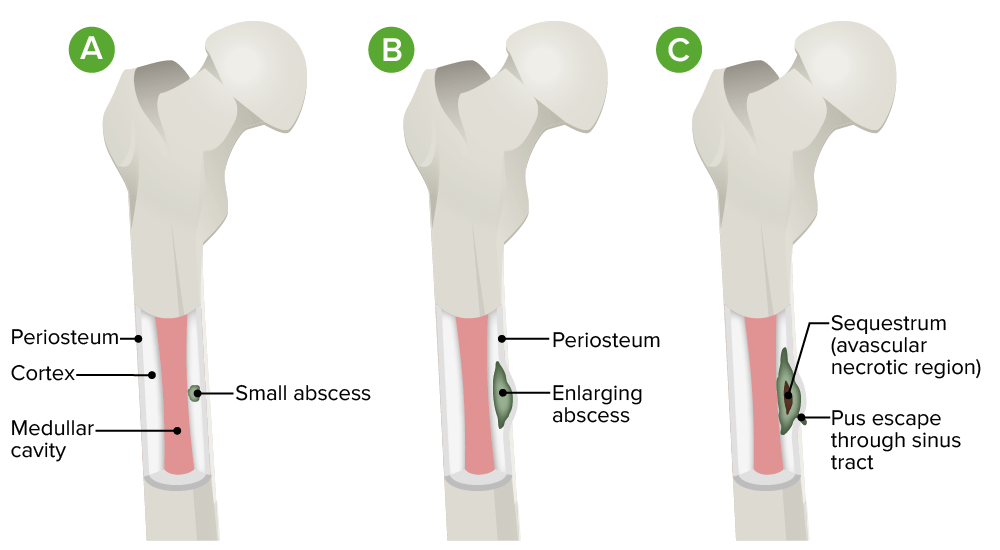
Osteomyelitis is an infection in a bone. It can affect one or more parts of a bone. Infections can reach a bone through the bloodstream or from nearby infected tissue. Infections can also begin in the bone if an injury opens the bone to germs.
People who smoke and people with chronic health conditions, such as diabetes or kidney failure, are at higher risk of getting osteomyelitis. People who have diabetes with foot ulcers may get osteomyelitis in the bones of their feet. Most people with osteomyelitis need surgery to remove areas of the affected bone. After surgery, most often people need strong antibiotics given through a vein.
Symptoms
- Swelling
- Warmth
- Tenderness
- Pain near the infection
- Tiredness
- Skin discoloration
- Fever
- A general feeling of being sick or unwell
- Bone pain
- Chills
- Sweating
- Nausea and vomiting
Cause
Most often, Staphylococcus bacteria cause osteomyelitis. These bacteria are germs that live on the skin or in the nose of all people. Germs can enter a bone through: The bloodstream. Germs in other parts of your body can travel through the blood to a weak spot on a bone. For instance, germs can come from pneumonia in the lungs or a urinary tract infection in the bladder. Injuries. Puncture wounds can carry germs deep inside the body. If such an injury becomes infected, the germs can spread into a nearby bone. Germs can also enter the body from a broken bone that sticks out through the skin. Surgery. Germs can enter the body and travel to the bones during surgeries to replace joints or fix broken bones.
Risk Factors
Healthy bones resist infection. But bones are less able to resist infection as you get older. Besides wounds and surgery, other factors that can increase your risk of osteomyelitis may include: Conditions that weaken the immune system. This includes diabetes that isn’t well-controlled. Peripheral artery disease. This is a condition in which narrowed arteries cut blood flow to the arms or legs. Sickle cell disease. This condition is passed through families, called inherited. Sickle cell disease affects the shape of red blood cells and slows blood flow. Dialysis and other procedures that use medical tubing. Dialysis uses tubes to remove waste from the body when the kidneys don’t work well. The medical tubes can carry germs from outside the body inside. Pressure injuries. People who can’t feel pressure or who stay in one position for too long can get sores on their skin where the pressure is. These sores are called pressure injuries. If a sore is there for a time, the bone under it can become infected. Illicit drugs by needles. People who take illicit drugs by injection are more likely to get osteomyelitis. This is true if they use needles that aren’t sterile and if they don’t clean the skin before using the needles.
When to see a Doctor
See your healthcare professional if you have a fever and bone pain that gets worse. People at risk of infection because of a medical condition or recent surgery, or an injury should see a healthcare professional right away if they have symptoms of an infection.