
Osteoarthritis
What is Osteoarthritis ?
Osteoarthritis is the most common form of arthritis, affecting millions of people worldwide. It happens when the protective cartilage that cushions the ends of the bones wears down over time. Although osteoarthritis can damage any joint, the condition most commonly affects joints in the hands, knees, hips, and spine.
Osteoarthritis symptoms can usually be managed, although the damage to joints can’t be reversed. Staying active, maintaining a healthy weight and receiving certain treatments might slow progression of the disease and help improve pain and joint function.
Symptoms
- Pain
- Stiffness
- Tenderness
- Loss of flexibility
- Grating sensation
- Bone spurs
- Swelling
- A grinding or cracking sensation when moving the joint
- A decreased range of motion
- A joint looking noticeably different
Cause
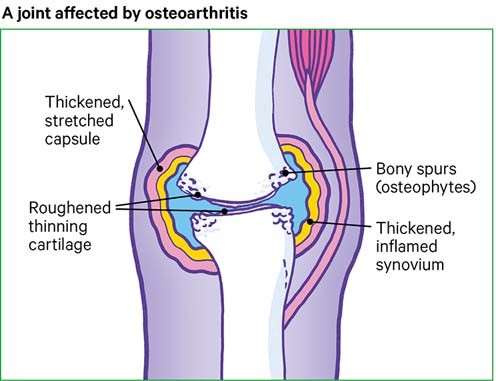
Osteoarthritis happens when the cartilage that cushions the ends of bones in the joints gradually wears away. Cartilage is a firm, slippery tissue that allows nearly frictionless joint motion. Eventually, if the cartilage wears down completely, bone will rub on bone. Osteoarthritis doesn’t only affect the cartilage. It also affects the entire joint. It causes changes in the bone and weakens the strong bands of tissue that hold the joint together and attach muscle to bone. It may also cause swelling of the joint lining.
Risk Factors
Factors that can increase your risk of osteoarthritis include: Older age. The risk of osteoarthritis increases with age. Sex assigned at birth. People assigned female at birth are more likely to develop osteoarthritis, though it isn’t clear why. Obesity. Carrying extra body weight contributes to osteoarthritis in several ways. The more you weigh, the greater your risk. Increased weight adds stress to weight-bearing joints, such as the hips and knees. Also, fat tissue produces proteins that can cause harmful swelling in and around your joints. Joint injuries. Injuries, such as those that happen when playing sports or from an accident, can increase the risk of osteoarthritis. Even injuries that occurred many years ago can increase the risk of osteoarthritis. Repeated stress on the joint. If a job or sport places repetitive stress on a joint, that joint might develop osteoarthritis someday. Genetics. Some people inherit a tendency to develop osteoarthritis. Bone deformities. Some people are born with malformed joints or defective cartilage. Certain metabolic diseases. These include diabetes and a condition in which your body has too much iron, called hemochromatosis.
When to see a Doctor
If joint pain or stiffness doesn’t go away, make an appointment with your healthcare professional.