
Neuromyelitis Optica
What is Neuromyelitis Optica ?
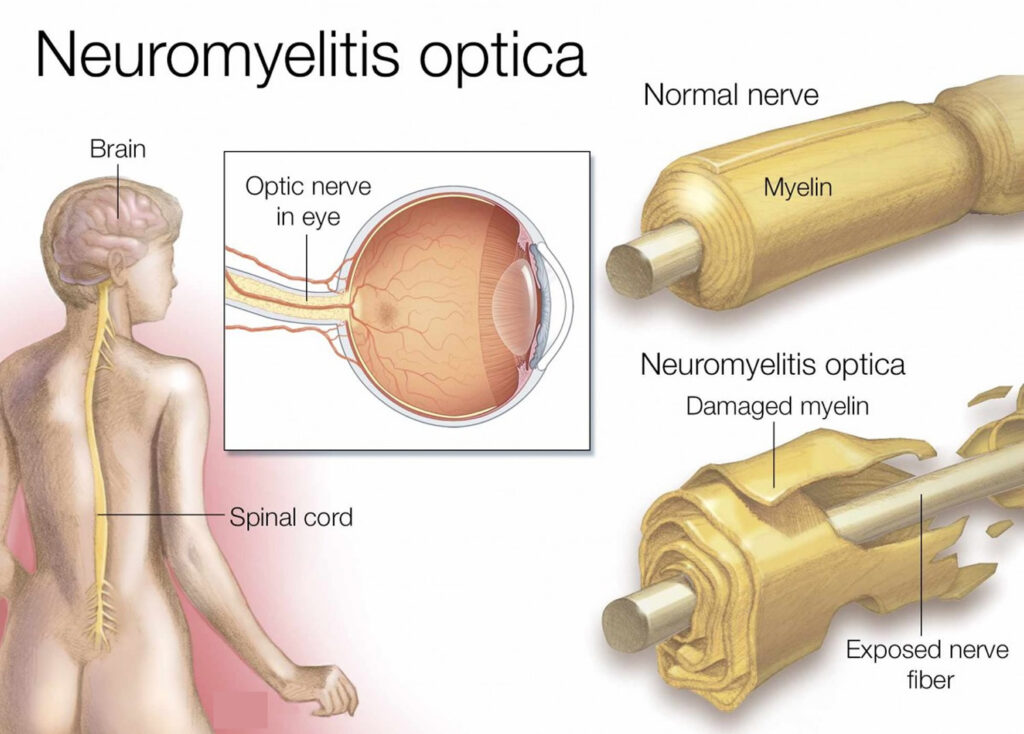
Neuromyelitis optica, also known as NMO, is a central nervous system disorder that causes inflammation in nerves of the eye and the spinal cord. NMO is also called neuromyelitis optica spectrum disorder (NMOSD) and Devic disease. It occurs when the immune system reacts against the body’s cells. This happens mainly in the spinal cord and in the optic nerves that connect the retina of the eye with the brain. But it sometimes happens in the brain.
The condition may appear after an infection, or it can be linked to another autoimmune condition. Altered antibodies bind to proteins in the central nervous system and cause damage. Neuromyelitis optica is often misdiagnosed as multiple sclerosis, also known as MS, or is seen as a type of MS. But NMO is a different condition. Neuromyelitis optica can cause blindness, weakness in the legs or arms, and painful spasms. It can also cause loss of sensation, vomiting and hiccups, and bladder or bowel symptoms. Symptoms can get better and then worse again, known as a relapse. Treatment to prevent relapses is crucial in helping to prevent disability. NMO can cause permanent vision loss and trouble walking.
Symptoms
- Blurred vision or loss of vision in one or both eyes
- Not being able to see color
- Eye pain
- Stiffness, weakness or numbness in the legs
- Loss of feeling in the arms or legs
- Not being able to empty the bladder
- A tingling feeling or pain in the neck, back or stomach
- Hiccups
- Nausea and vomiting
- Increased sensitivity to cold and heat
Cause
Experts don’t know exactly what causes neuromyelitis optica. In people who have the disease, the immune system attacks healthy tissues in the central nervous system. The central nervous system includes the spinal cord, brain, and optic nerves that connect the retina of the eye with the brain. The attack occurs because altered antibodies bind to proteins in the central nervous system and cause damage. This immune system reaction causes swelling, known as inflammation, and leads to damage to nerve cells.
Risk Factors
Neuromyelitis optica is rare. Some factors that may raise the risk of getting NMO include Sex assigned at birth. Women have NMO more often than do men. Age. Most often, NMO affects adults. The average age of diagnosis is 40. However, children and older adults can also have neuromyelitis optica. Race or ethnicity. People of Hispanic, Asian, or African or Afro-Caribbean descent have NMO at higher rates than do people who are white. Some research suggests that not having enough vitamin D in the body, smoking, and having a few infections early in life also may raise the risk of neuromyelitis optica.
When to see a Doctor
See a GP if you have any of the symptoms of NMO. The GP will refer you to a neurologist (a specialist in conditions that affect the nerves) for further testing to confirm the diagnosis and rule out any other conditions with similar symptoms, such as multiple sclerosis.