
Mumps
What is Mumps ?
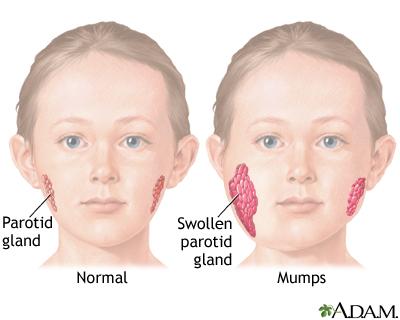
Mumps is an illness caused by a virus. It usually affects the glands on each side of the face. These glands, called parotid glands, make saliva. Swollen glands may be tender or painful.
Mumps are not common in the United States because of vaccines. But outbreaks do happen. People who are not vaccinated are at high risk of infection. Vaccinated people who get mumps usually have milder symptoms and fewer complications. There is no specific medicine for mumps. Treatment relieves pain and discomfort.
Symptoms
- Fever
- Headache
- Muscle aches or pain
- Not wanting to eat
- Tiredness
- Swelling of one or both glands on the sides of the face
- Pain or tenderness around the swelling
- Swelling of glands below the floor of the mouth
- Dry mouth
- Painful chewing or swallowing
Cause
Mumps is caused by a type of germ called a virus. When someone has mumps, the virus is in saliva. Coughing or sneezing can release tiny droplets with the virus into the air. You can get the virus by breathing in tiny droplets. Or you can get the virus by touching a surface where droplets have landed and then touching your face. You also can pick up the virus from direct contact, such as kissing or sharing a water bottle. Outbreaks in the United States most often happen where people live or work in close contact. These may include college campuses, summer camps and schools.
Risk Factors
Mumps is a contagious viral infection, and risk factors include being unvaccinated, living in close quarters like college campuses, international travel, and having a weakened immune system. Children between 2 and 12 are also more susceptible. Individuals who haven’t received the MMR vaccine (measles, mumps, rubella) are at a significantly higher risk of getting mumps. Living or working in close contact with others, such as in schools, dormitories, or daycares, increases the likelihood of mumps transmission. Traveling to regions where mumps is more prevalent or where outbreaks are occurring can increase the risk of exposure. People with compromised immune systems due to conditions like HIV/AIDS or certain medications (like corticosteroids or chemotherapy) are more vulnerable to mumps and its complications. While mumps can affect anyone, it’s more common in children between 2 and 12 years old. Public spaces and events where many people gather can also increase the risk of mumps spread.
When to see a Doctor
See your health care provider if you or your child has symptoms of mumps. Mumps spreads very easily for about five days after the swelling starts. If you think you have mumps, let the clinic know before you go. The clinic staff will likely take steps to prevent the spread of disease. Other conditions may have similar symptoms, so it’s important to get a quick diagnosis.