
Malaria
What is Malaria ?
Malaria is a disease caused by a parasite. The parasite is spread to humans through the bites of infected mosquitoes. People who have malaria usually feel very sick with a high fever and shaking chills. While the disease is uncommon in temperate climates, malaria is still common in tropical and subtropical countries. Each year nearly 290 million people are infected with malaria, and more than 400,000 people die of the disease.
To reduce malaria infections, world health programs distribute preventive drugs and insecticide-treated bed nets to protect people from mosquito bites. The World Health Organization has recommended a malaria vaccine for use in children who live in countries with high numbers of malaria cases. Protective clothing, bed nets and insecticides can protect you while traveling. You also can take preventive medicine before, during and after a trip to a high-risk area. Many malaria parasites have developed resistance to common drugs used to treat the disease.
Symptoms
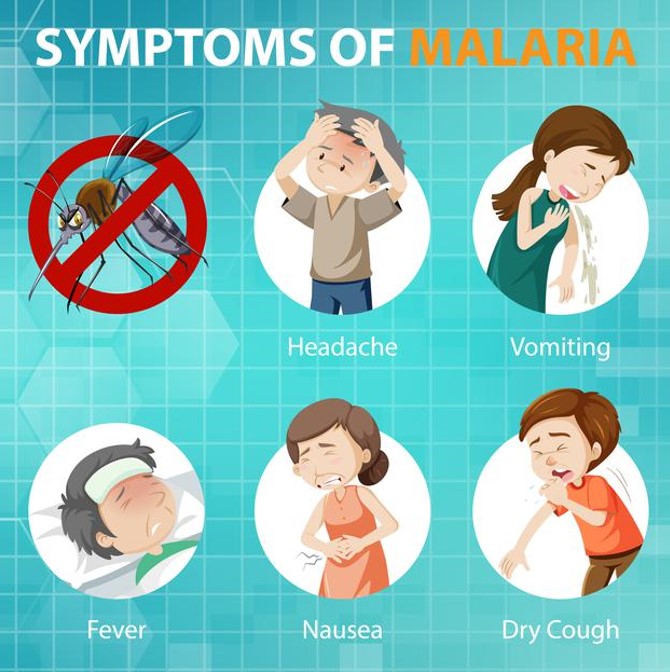
- Fever
- Chills
- General feeling of discomfort
- Headache
- Nausea and vomiting
- Diarrhea
- Abdominal pain
- Muscle or joint pain
- Fatigue
- Rapid breathing
- Rapid heart rate
- Cough
Cause
Plasmodium parasites cause malaria. There are five types that can infect humans. A mosquito gets infected when it bites someone who’s infected with the parasites. When that mosquito bites someone else, it transfers a parasite to the other person’s bloodstream. There, the parasites multiply. In rare cases, malaria can pass from a pregnant woman to the fetus during pregnancy or birth. It’s possible, but unlikely, for malaria to be passed through blood transfusions, organ donations and needles.
Risk Factors
The greatest risk factor for developing malaria is living in or visiting areas where the disease is common. These include the tropical and subtropical regions of Sub-Saharan Africa. South and Southeast Asia. Pacific Islands. Central America and northern South America. The degree of risk depends on local malaria control, seasonal changes in malaria rates, and the precautions you take to prevent mosquito bites. People at increased risk of serious disease include young children and infants. Older adults. Travelers coming from areas with no malaria. Pregnant women and their unborn children. In many countries with high malaria rates, the problem is worsened by a lack of access to preventive measures, medical care, and information.
When to see a Doctor
Talk to your doctor if you experience a fever while living in or after traveling to a high-risk malaria region. If you have severe symptoms, seek emergency medical attention.