
Herpes
What is Herpes ?
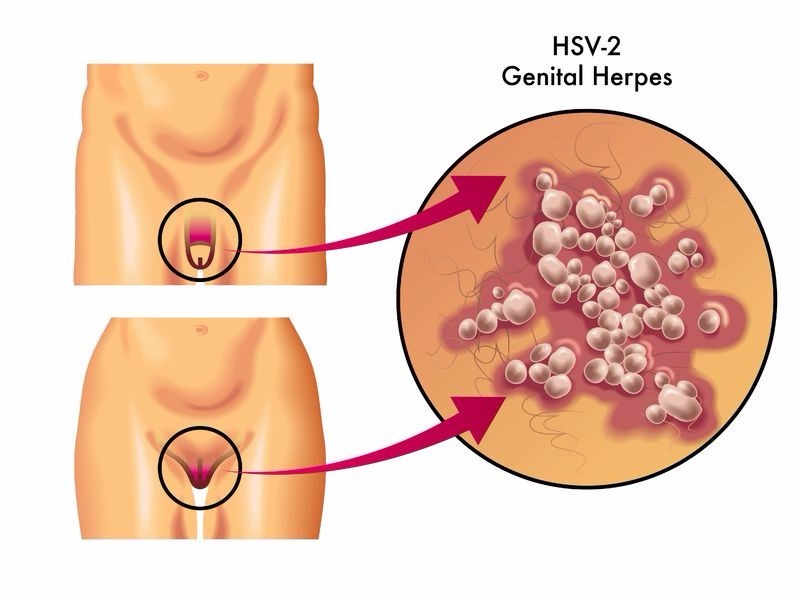
Genital herpes is a common sexually transmitted infection (STI). The herpes simplex virus (HSV) causes genital herpes. Genital herpes can often be spread by skin-to-skin contact during sexual activity. Some people infected with the virus may have very mild symptoms or no symptoms. They can still able to spread the virus. Other people have pain, itching, and sores around the genitals, anus, or mouth.
There is no cure for genital herpes. Symptoms often show up again after the first outbreak. Medicine can ease symptoms. It also lowers the risk of infecting others. Condoms can help prevent the spread of a genital herpes infection.
Symptoms
- Pain or itching around the genitals
- Small bumps or blisters
- Painful ulcers
- Scabs that form as the ulcers heal
- Painful urination
- Swollen lymph nodes in the groin
- Discharge from the urethra
- Discharge from the vagina
- Fever
- Headache
- Body aches
- Fatigue
Cause
Genital herpes is caused by two types of the herpes simplex virus. These types include herpes simplex virus type 2 (HSV-2) and herpes simplex virus type 1 (HSV-1). People with HSV infections can pass along the virus even when they have no visible symptoms. HSV-2 is the most common cause of genital herpes. The virus can be present on blisters and ulcers or in the fluid from ulcers. The moist lining or fluids of the mouth. The moist lining or fluids of the vagina or rectum. The virus moves from one person to another during sexual activity. HSV-1 is a version of the virus that causes cold sores or fever blisters. People may be exposed to HSV-1 as children due to close skin-to-skin contact with someone infected. A person with HSV-1 in tissues of the mouth can pass the virus to the genitals of a sexual partner during oral sex. The newly caught infection is a genital herpes infection. Recurrent outbreaks of genital herpes caused by HSV-1 are often less frequent than outbreaks caused by HSV-2. Neither HSV-1 nor HSV-2 survives well at room temperature. So the virus is not likely to spread through surfaces, such as a faucet handle or a towel. But kissing or sharing a drinking glass or silverware might spread the virus.
Risk Factors
A higher risk of getting genital herpes is linked to contact with genitals through oral, vaginal or anal sex. Having sexual contact without using a barrier increases your risk of genital herpes. Barriers include condoms and condom-like protectors called dental dams used during oral sex. Women are at higher risk of getting genital herpes. The virus can spread more easily from men to women than from women to men. Having sex with multiple partners. The number of people you have sex with is a strong risk factor. Contact with genitals through sex or sexual activity puts you at higher risk. Most people with genital herpes do not know they have it. Having a partner who has the disease but is not taking medicine to treat it. There is no cure for genital herpes, but medicine can help limit outbreaks. Certain groups within the population. Women, people with a history of sexually transmitted diseases, older people, Black people in the United States, and men who have sex with men are diagnosed with genital herpes at a higher-than-average rate. People in groups at higher risk may choose to talk to a health care provider about their personal risk.
When to see a Doctor
Because a person might not have symptoms even if they have herpes, it can be difficult to know when to see a doctor for diagnosis and treatment. Planned Parenthood recommends that a person see a healthcare professional as soon as they notice sores on or around their genitals. Other STIs, such as syphilis, can have similar symptoms but require different treatment.