
Hemorrhoids
What is Hemorrhoids ?
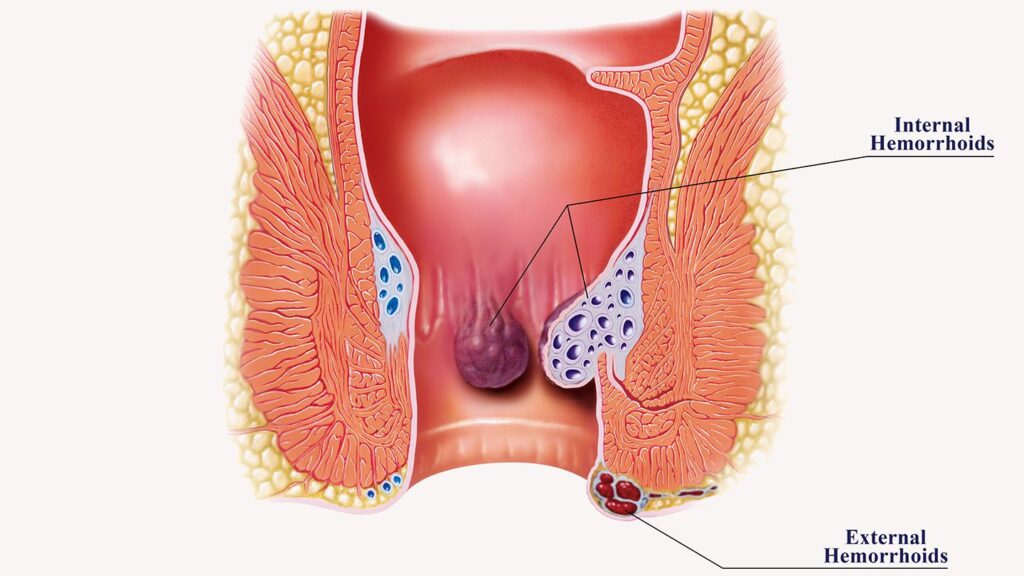
Hemorrhoids (HEM-uh-roids), also called piles, are swollen veins in the anus and lower rectum. Hemorrhoids are similar to varicose veins. Hemorrhoids can develop inside the rectum, called internal hemorrhoids. They can also develop under the skin around the anus, called external hemorrhoids.
There are several options available to treat hemorrhoids. Many people get relief with home treatments and lifestyle changes.
Symptoms
- Painless bleeding during bowel movements
- Itching or irritation in the anal region
- Pain or discomfort
- Swelling around the anus
- Bleeding
- Protruding hemorrhoid
- Severe pain
- Inflammation
- A hard, discolored lump near the anus
- Mucus Discharge
Cause
The veins around the anus tend to stretch under pressure and may bulge or swell. Hemorrhoids can develop from increased pressure in the lower rectum due to straining during bowel movements. Sitting for long periods, especially on the toilet. Having chronic diarrhea or constipation. Being obese. Being pregnant. Having anal intercourse. Eating a low-fiber diet. Regularly lifting heavy items.
Risk Factors
As people age, the risk of hemorrhoids increases. That’s because the tissues that support the veins in the rectum and anus can weaken and stretch. This also can happen during pregnancy because the baby’s weight puts pressure on the anal region.
When to see a Doctor
If you have bleeding during bowel movements or you have hemorrhoids that don’t improve after a week of home care, talk to your health care provider. Don’t assume rectal bleeding is due to hemorrhoids, especially if you have changes in bowel habits or if your stools change in color or consistency. Rectal bleeding can happen with other diseases, including colorectal cancer and anal cancer. Seek emergency care if you have large amounts of rectal bleeding, lightheadedness, dizziness, or faintness.