
Hearing Loss
What is Hearing Loss ?
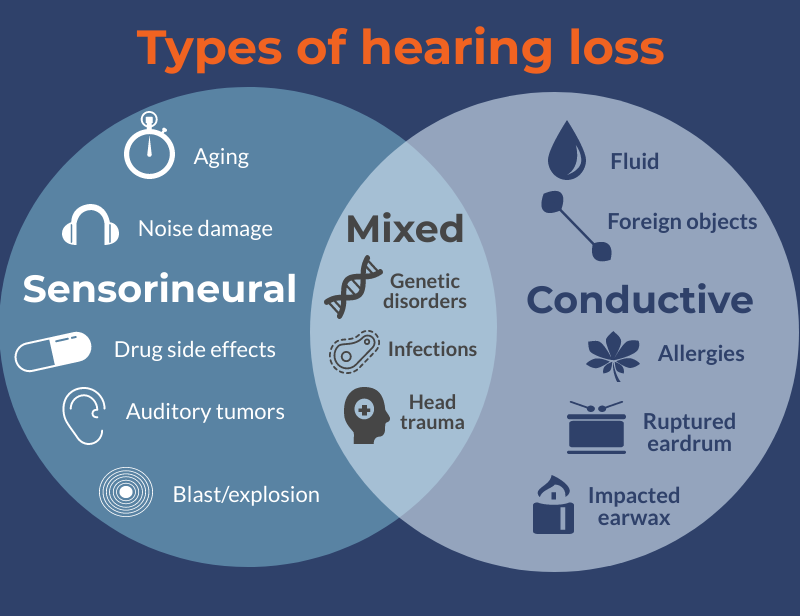
Hearing loss that comes on little by little as you age, also known as presbycusis, is common. More than half the people in the United States older than age 75 have some age-related hearing loss. There are three types of hearing loss: Conductive, which involves the outer or middle ear. Sensorineural, which involves the inner ear. Mixed, which is a mix of the two.
Aging and being around loud noises both can cause hearing loss. Other factors, such as too much earwax, can lower how well the ears work for a time. You usually can’t get a hearing back. But there are ways to improve what you hear.
Symptoms
- You often ask people to repeat themselves
- You have trouble following a conversation
- You think people are mumbling
- You can’t hear certain high-pitched sounds
- You need to turn up the volume on your television
- You have tinnitus
- Your ear hurts
- You feel as if there’s pressure or fluid inside your ear
- You have balance problems
- Dizziness
Cause
To understand how hearing loss happens, it can be helpful to understand how hearing works. The ear has three main parts: the outer ear, the middle ear, and the inner ear. Sound waves pass through the outer ear and cause the eardrum to vibrate. The eardrum and three small bones of the middle ear make the vibrations bigger as they travel to the inner ear. There, the vibrations pass through fluid in a snail-shaped part of the inner ear, known as the cochlea. Attached to nerve cells in the cochlea are thousands of tiny hairs that help turn sound vibrations into electrical signals. The electrical signals are transmitted to the brain. The brain turns these signals into sound. Causes of hearing loss include: Damage to the inner ear, Buildup of earwax, Ear infection, or unusual bone growths or tumors. Ruptured eardrum.
Risk Factors
Factors that damage or lead to loss of the hairs and nerve cells in the inner ear include: Aging. The inner ear breaks down over time. Loud noise. Being around loud sounds can damage the cells of the inner ear. Damage can happen from being around loud noises over time. Or the damage can come from a short blast of noise, such as from a gunshot. Heredity. Your genes may make you more likely to have ear damage from sound or aging. Noises on the job. Jobs where loud noise is constant, such as farming, construction, or factory work, can lead to damage to the ears. Noises at play. Exposure to explosive noises, such as from firearms and jet engines, can cause immediate, permanent hearing loss. Other activities with dangerously high noise levels include snowmobiling, motorcycling, carpentry, or listening to loud music. Some medicines. These include the antibiotic gentamicin, sildenafil (Viagra), and certain medicines used to treat cancer, which can damage the inner ear. Very high doses of aspirin, other pain relievers, antimalarial drugs, or loop diuretics can cause short-term effects on hearing. These include ringing in the ears, also known as tinnitus, or hearing loss. Some illnesses. Illnesses such as meningitis that cause high fever can harm the cochlea.
When to see a Doctor
If you have a sudden loss of hearing, particularly in one ear, seek medical attention right away. Talk to your health care provider if loss of hearing is causing you trouble. Age-related hearing loss happens little by little. So you may not notice it at first.