
Gastroesophageal Reflux
What is Gastroesophageal Reflux ?
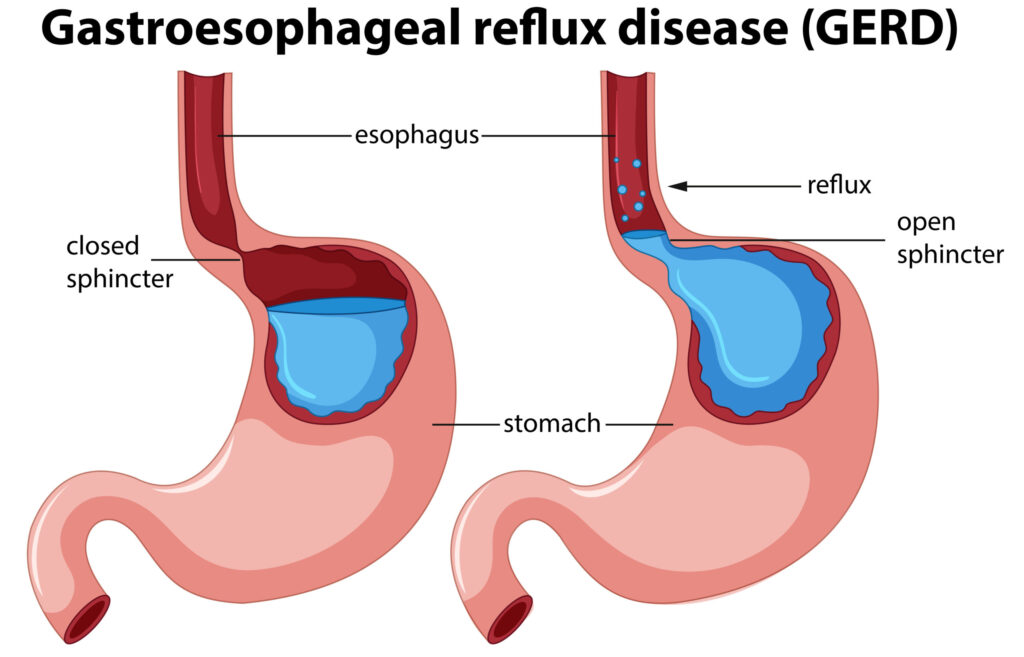
Gastroesophageal reflux disease is a condition in which stomach acid repeatedly flows back up into the tube connecting the mouth and stomach, called the esophagus. It’s often called GERD for short. This backwash is known as acid reflux, and it can irritate the lining of the esophagus.
Many people experience acid reflux now and then. However, when acid reflux happens repeatedly over time, it can cause GERD. Most people can manage the discomfort of GERD with lifestyle changes and medicines. And though it’s uncommon, some may need surgery to help with symptoms.
Symptoms
- A burning sensation in the chest
- Backwash of food or sour liquid in the throat
- Upper belly or chest pain
- Trouble swallowing, called dysphagia
- Sensation of a lump in the throat
- Burping
- An ongoing cough
- Inflammation of the vocal cords
- New or worsening asthma
- A sour taste in the mouth
- Nausea
- Bloating
Cause
GERD is caused by frequent acid reflux or reflux of nonacidic content from the stomach. When you swallow, a circular band of muscle around the bottom of the esophagus, called the lower esophageal sphincter, relaxes to allow food and liquid to flow into the stomach. Then the sphincter closes again. If the sphincter does not relax as is typical or it weakens, stomach acid can flow back into the esophagus. This constant backwash of acid irritates the lining of the esophagus, often causing it to become inflamed.
Risk Factors
Conditions that can increase the risk of GERD include Obesity. Bulging of the top of the stomach up above the diaphragm, known as a hiatal hernia. Pregnancy. Connective tissue disorders, such as scleroderma. Delayed stomach emptying. Factors that can aggravate acid reflux include Smoking. Eating large meals or eating late at night. Eating certain foods, such as fatty or fried foods. Drinking certain beverages, such as alcohol or coffee. Taking certain medicines, such as aspirin.
When to see a Doctor
Seek medical help right away if you have chest pain, especially if you also have shortness of breath, or jaw or arm pain. These may be symptoms of a heart attack.