
Fibromyalgia
What is Fibromyalgia ?
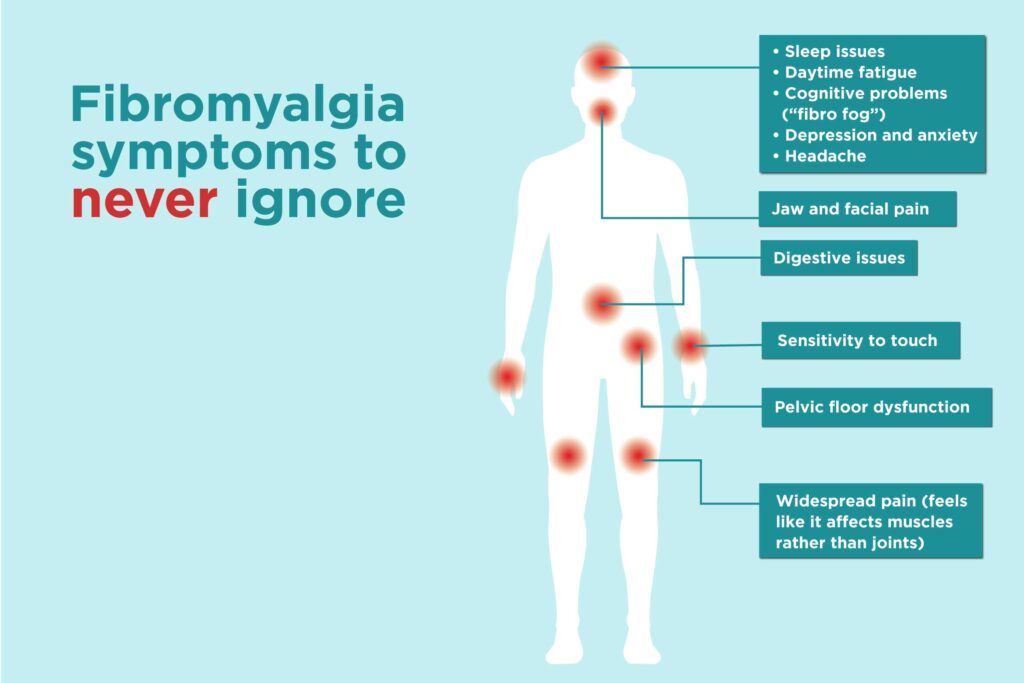
Fibromyalgia is a long-term condition that involves widespread body pain. The pain happens along with fatigue. It can also involve issues with sleep, memory, and mood. Researchers think that fibromyalgia affects the way the brain and spinal cord process painful and nonpainful signals. That increases your overall pain sensitivity.
Symptoms often start after a triggering event. Triggers can include injuries, surgery, infections, or emotional stress. Or the symptoms can build up over time, with no single event to trigger them. Women are more likely to get fibromyalgia than men. Many people who have fibromyalgia also have headaches, jaw and facial pain due to temporomandibular joint (TMJ) disorders, irritable bowel syndrome, anxiety, and depression. There’s no cure for fibromyalgia. But medicines and other treatments can help control the symptoms. Exercise, talk therapy, and techniques that lower stress also may help.
Symptoms
- Widespread pain
- Fatigue
- Thinking-related troubles
- Irritable bowel syndrome
- Chronic fatigue syndrome
- Migraine and other headaches
- Interstitial cystitis
- Temporomandibular joint disorders
- Anxiety
- Depression
- Postural tachycardia syndrome
- Post-COVID syndrome
Cause
With fibromyalgia, many researchers think nerves are affected in a way that causes the brain and spinal cord to change. This change involves an irregular rise in levels of certain chemicals in the brain that signal pain. In addition, the brain’s pain receptors seem to develop a sort of memory of the pain. They can start to overreact to painful and nonpainful signals. Many factors likely lead to these changes, including Genes. Fibromyalgia tends to run in families. So certain gene changes might make you more likely to get the condition. Infections. Some illnesses appear to trigger fibromyalgia or make it worse. Physical or emotional events. Sometimes, fibromyalgia can be triggered by a physical event, such as a car accident. Ongoing stress may also trigger the condition.
Risk Factors
Risk factors for fibromyalgia include: Being assigned female at birth. Fibromyalgia is more common in women than in men. Family history. You may be more likely to get fibromyalgia if a parent or sibling also has the condition. Other medical conditions. Your risk of fibromyalgia rises if you have osteoarthritis, rheumatoid arthritis, lupus, or obesity.
When to see a Doctor
Make an appointment with your doctor if any signs bother you.