
Eating Disorder
What is Eating Disorder ?
Eating disorders are serious health conditions that affect both your physical and mental health. These conditions include problems in how you think about food, eating, weight and shape, and in your eating behaviors. These symptoms can affect your health, your emotions, and your ability to function in important areas of life. If not treated effectively, eating disorders can become long-term problems and, in some cases, can cause death. The most common eating disorders are anorexia, bulimia, and binge-eating disorder.
Most eating disorders involve focusing too much on weight, body shape, and food. This can lead to dangerous eating behaviors. These behaviors can seriously affect the ability to get the nutrition your body needs. Eating disorders can harm the heart, digestive system, bones, teeth, and mouth. They can lead to other diseases. They’re also linked with depression, anxiety, self-harm, and suicidal thoughts and behaviors. With proper treatment, you can return to healthier eating habits and learn healthier ways to think about food and your body. You also may be able to reverse or reduce serious problems caused by the eating disorder.
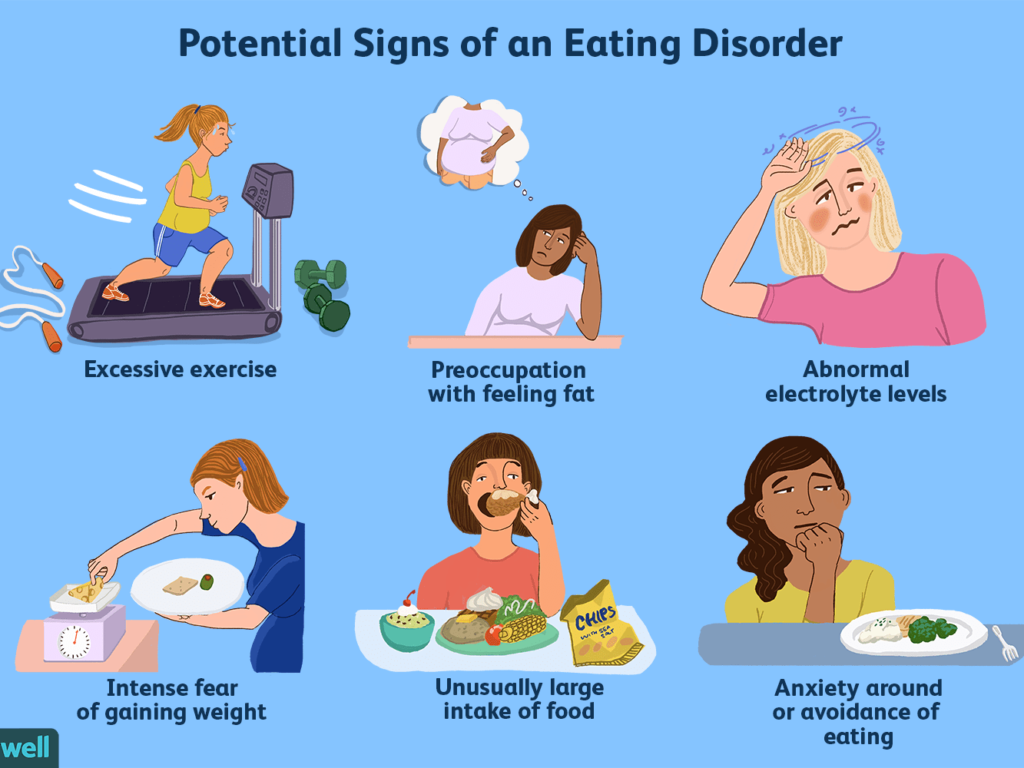
Symptoms
- Mood swings
- Fatigue
- Fainting or dizziness
- Thinning hair or hair loss
- Unexplained weight changes or drastic weight loss
- Unusual sweating or hot flashes
- Restrictive eating
- Eating a lot in a short amount of time
- Avoiding food or certain foods
- Forced vomiting after meals or laxative misuse
- Compulsive exercising after meals
- Frequent bathroom breaks after eating
Cause
The exact cause of eating disorders is not known. As with other mental health conditions, there may be different causes, such as Genetics. Some people may have genes that increase their risk of developing eating disorders. Biology. Biological factors, such as changes in brain chemicals, may play a role in eating disorders.
Risk Factors
Anyone can develop an eating disorder. Eating disorders often start in the teen and young adult years. But they can occur at any age. Certain factors may increase the risk of developing an eating disorder, including: Family history. Eating disorders are more likely to occur in people who have parents or siblings who’ve had an eating disorder. Other mental health issues. Trauma, anxiety, depression, obsessive-compulsive disorder, and other mental health issues can increase the likelihood of an eating disorder. Dieting and starvation. Frequent dieting is a risk factor for an eating disorder, especially when weight is constantly going up and down when getting on and off new diets. There is strong evidence that many of the symptoms of an eating disorder are symptoms of starvation. Starvation affects the brain and can lead to mood changes, rigid thinking, anxiety, and reduced appetite. This may cause severely limited eating or problem eating behaviors to continue and make it difficult to return to healthy eating habits. A history of weight bullying. People who have been teased or bullied for their weight are more likely to develop problems with eating and eating disorders. This includes people who have been made to feel ashamed of their weight by peers, health care professionals, coaches, teachers, or family members. Stress. Whether it’s heading off to college, moving, landing a new job, or a family or relationship issue, change can bring stress. And stress may increase the risk of an eating disorder.
When to see a Doctor
An eating disorder can be difficult to manage or overcome by yourself. Eating disorders can virtually take over your life. If you’re experiencing any of these problems or if you think you may have an eating disorder, seek medical help.