
Ear Infection
What is Ear Infection ?
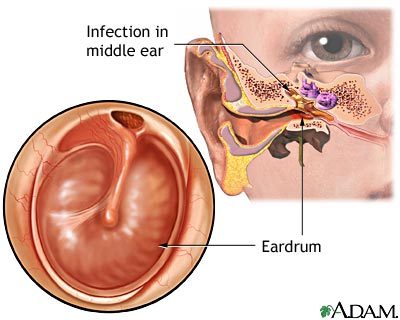
An ear infection, also known as acute otitis media, is an infection of the air-filled space behind the eardrum, known as the middle ear. Children are more likely than adults to get ear infections. Ear infections often clear up on their own.
So treatment might begin with managing pain and watching the issue. Sometimes, healthcare professionals prescribe antibiotics to clear the infection. Some people have repeated ear infections. This can cause hearing problems and other serious complications.
Symptoms
- Ear pain
- Tugging at an ear
- Trouble sleeping
- Crying more than usual
- Fussiness
- Trouble hearing or replying to sounds
- Loss of balance
- Fever
- Fluid coming from the ear
- Headache
- Loss of appetite
- Ear pressure
Cause
A bacterium or virus in the middle ear causes an ear infection. This infection often comes from another illness, such as a cold, flu, or allergy. These can cause the inside of the nose, throat, and ears to be swollen and stuffy. The eustachian tubes are a pair of narrow tubes that run from each middle ear to high in the back of the throat, behind the nose. The end of the tube opens and closes to keep air pressure even in the middle ear. Bring fresh air to the ear. Drain fluids from the middle ear. Swollen eustachian tubes can become blocked, causing fluids to build up in the middle ear. This fluid can become infected and cause the symptoms of an ear infection. In young children, these tubes are narrower and more level than adults’ are. As a result, they’re harder to drain and more likely to get clogged. Two small pads of tissue high in the back of the nose, also known as adenoids, help fight off infection. Adenoids are near the opening of the eustachian tubes. Swelling of the adenoids can block the tubes. This can lead to middle ear infection, especially in children.
Risk Factors
Risk factors for ear infections include: Age. Children between the ages of 6 months and 2 years are more likely to get ear infections. That’s due to the size and shape of their eustachian tubes. Group child care. Children cared for in group settings are more likely to get colds and ear infections than are children who stay home. Children in group settings come into contact with more infections, such as the common cold. Bottle feeding. Babies who drink from a bottle tend to have more ear infections than do babies who breastfeed. This is especially true if they’re given a bottle while in their cribs. Seasons. Ear infections are most common during the fall and winter. People with allergies during certain seasons might have a greater risk of ear infections when pollen counts are high. Poor air quality. If you’re around tobacco smoke or a lot of air pollution, you have a higher risk of ear infections. Cleft palate. The bones and muscles in the faces of children who have cleft palates can make it harder for the eustachian tube to drain.
When to see a Doctor
Many conditions have symptoms of an ear infection. It’s important to get a good diagnosis and prompt treatment. Call your child’s healthcare professional for severe symptoms.