
Dry Macular Degeneration
What is Dry Macular Degeneration ?
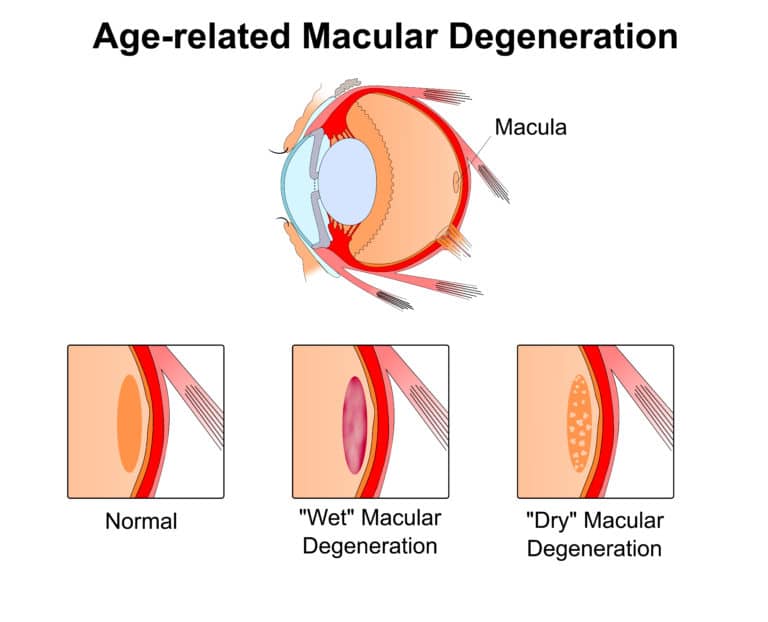
Dry macular degeneration is an eye condition that causes blurred vision or reduced central vision. It is caused by the breakdown of a part of the retina known as the macula (MAK-u-luh). The macula is responsible for central vision. This condition is common among people over 50.
Dry macular degeneration may start in one eye and then develop in the other eye. It may also develop in both eyes at the same time. Over time, vision may deteriorate and impact the ability to perform tasks such as reading, driving, and recognizing faces. But having dry macular degeneration doesn’t mean you’ll lose all your sight. Vision loss is typically central, and people retain their side vision. Some people have only mild central vision loss. In others, it can be more severe. Early detection and self-care measures may delay vision loss caused by dry macular degeneration.
Symptoms
- Visual distortions
- Reduced central vision in one or both eyes
- The need for brighter light when reading
- Increased difficulty adapting to low light levels
- Increased blurriness of printed words
- Difficulty recognizing faces
- A blurry spot or blind spot in the field of vision
- Problems or changes in the way you see colors
- Low vision
- Straight lines that you see as curving or wavy
Cause
No one knows exactly what causes dry macular degeneration. Research suggests that it may be a combination of genes and other factors, including smoking, obesity, and diet. The condition develops as the eye ages. Dry macular degeneration affects the macula. The macula is the area of the retina that’s responsible for clear vision in the direct line of sight. Over time, tissue in the macula may thin and lose cells responsible for vision.
Risk Factors
Factors that may increase the risk of macular degeneration include Age. This disease is most common in people over 50. Family history and genetics. This disease has a hereditary component, meaning it runs in families. Researchers have identified several genes linked to the condition. Race. Macular degeneration is more common in white people. Smoking. Smoking cigarettes or being exposed to tobacco smoke regularly greatly increases the risk of macular degeneration. Obesity. Research suggests that obesity may increase the chance that early or intermediate macular degeneration will progress to the more serious form of the disease. Cardiovascular disease. If you have heart or blood vessel disease, called cardiovascular disease, you may be at higher risk of macular degeneration.
When to see a Doctor
See your eye care professional if you notice changes, such as distortion or blind spots, in your central vision. You lose the ability to see fine detail. These changes may be the first sign of macular degeneration, particularly if you’re over age 60.