
Cervical Spondylosis
What is Cervical Spondylosis ?
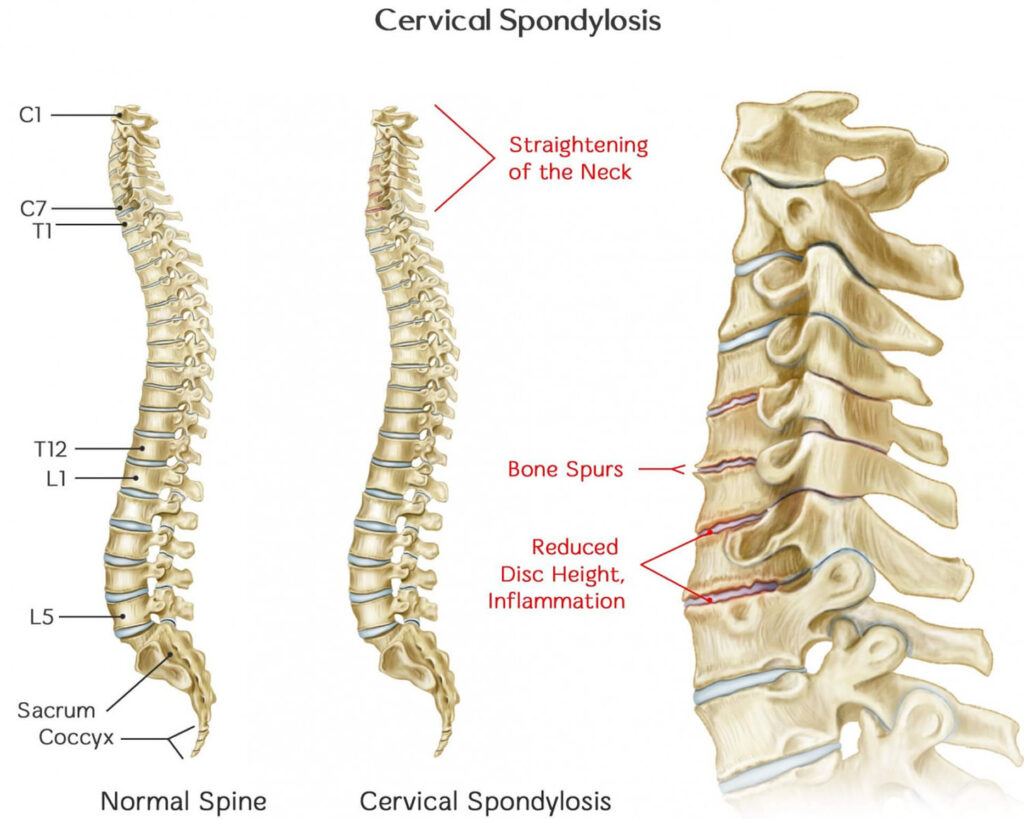
Cervical spondylosis is a general term for age-related wear and tear affecting the spinal disks in your neck. As the disks dehydrate and shrink, signs of osteoarthritis develop, including bony projections along the edges of bones (bone spurs).
Cervical spondylosis is very common and worsens with age. More than 85% of people older than age 60 are affected by cervical spondylosis. For most people, cervical spondylosis causes no symptoms. When symptoms do occur, nonsurgical treatments are often effective.
Symptoms
- Tingling, numbness and weakness
- Lack of coordination and difficulty walking
- Loss of bladder or bowel control
- Neck pain
- Stiff neck
- A bump or knot in your neck
- Muscle spasms
- A clicking, popping, grinding sound while moving neck
- Dizziness
- Headache
Cause
As people age, the structures that make up the backbone and neck gradually develop wear and tear. These changes can include Dehydrated disks. Disks act like cushions between the vertebrae of the spine. By the age of 40, most people’s spinal disks begin drying out and shrinking. As the disks become smaller, there is more bone-on-bone contact between the vertebrae. Herniated disks. Cracks also appear on the exterior of the spinal disks. The soft interior of a disk can squeeze through these cracks. Sometimes, it presses on the spinal cord and nerve roots. Bone spurs. As the disks break down, the body may produce extra amounts of bone in a misguided effort to strengthen the spine. These bone spurs can sometimes pinch the spinal cord and nerve roots. Stiff ligaments. Ligaments are cords of tissue that connect bone to bone. Spinal ligaments can stiffen with age, making the neck less flexible.
Risk Factors
Risk factors for cervical spondylosis include Age. Cervical spondylosis occurs commonly as part of aging. Occupation. Jobs that involve repetitive neck motions, awkward positioning, or a lot of overhead work put extra stress on the neck. Neck injuries. Previous neck injuries appear to increase the risk of cervical spondylosis. Genetic factors. Some individuals in certain families will experience more of these changes over time. Smoking. Smoking has been linked to increased neck pain.
When to see a Doctor
Seek medical attention if you notice a sudden onset of numbness or weakness, or loss of bladder or bowel control.