
Cataracts
What is Cataracts ?
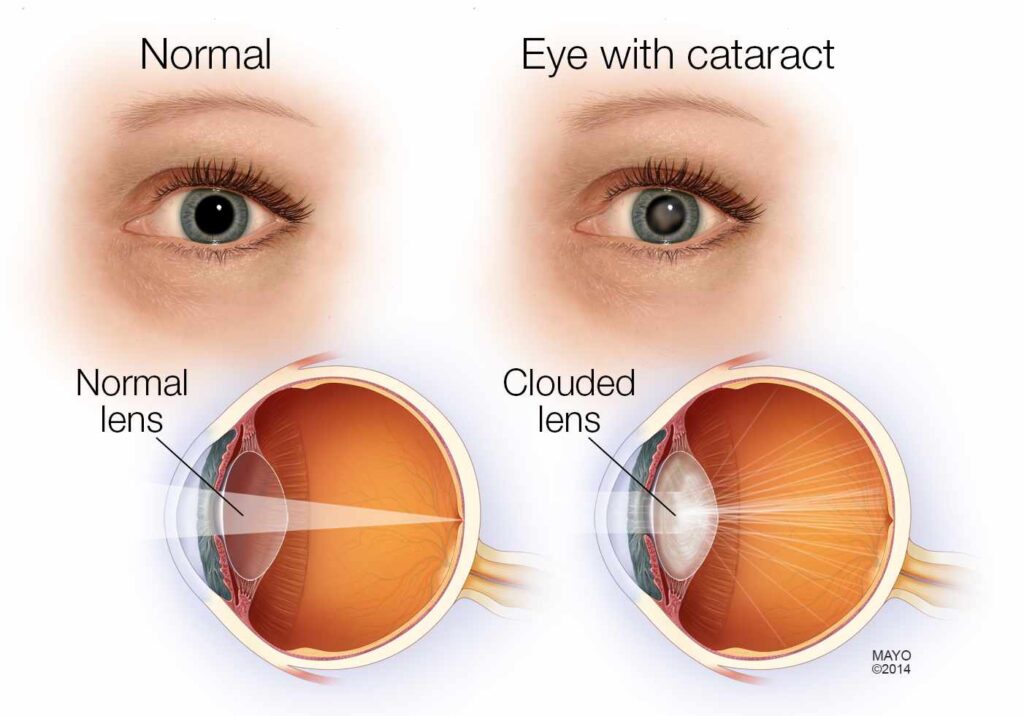
A cataract is a clouding of the lens of the eye, which is typically clear. For people who have cataracts, seeing through cloudy lenses is like looking through a frosty or fogged-up window. Clouded vision caused by cataracts can make it more difficult to read, drive a car at night or see the expression on a friend’s face.
Most cataracts develop slowly and don’t disturb eyesight early on. But with time, cataracts will eventually affect vision. At first, stronger lighting and eyeglasses can help deal with cataracts. But if impaired vision affects usual activities, cataract surgery might be needed. Fortunately, cataract surgery is generally a safe, effective procedure.
Symptoms
- Clouded vision
- Blurred or dim vision
- Trouble seeing at night
- Sensitivity to light and glare
- Need for brighter light for reading and other activities
- Seeing "halos" around lights
- Frequent changes in eyeglass or contact lens
- Fading or yellowing of colors
- Double vision in one eye
- Changes in the way you see color
Cause
Most cataracts develop when aging or injury changes the tissue that makes up the eye’s lens. Proteins and fibers in the lens begin to break down. This causes vision to become hazy or cloudy.
Some disorders passed down from parents that cause other health problems can increase your risk of cataracts. Cataracts can also be caused by other eye conditions, past eye surgery, or medical conditions such as diabetes. Long-term use of steroid medicines may also cause cataracts to develop.
Risk Factors
Factors that increase your risk of cataracts include increasing age, diabetes, getting too much sunlight, smoking, obesity, family history of cataracts, previous eye injury or inflammation, previous eye surgery, prolonged use of corticosteroid medicines, and drinking excessive amounts of alcohol.
When to see a Doctor
Make an appointment for an eye exam if you notice any changes in your vision. If you develop sudden vision changes, such as double vision or flashes of light, sudden eye pain, or a sudden headache, see a member of your health care team right away.