
Bronchitis
What is Bronchitis ?
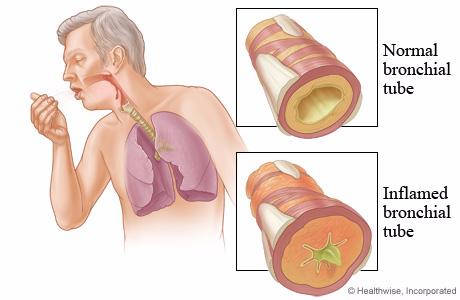
Bronchitis is an inflammation of the lining of your bronchial tubes. These tubes carry air to and from your lungs. People who have bronchitis often cough up thickened mucus, which can be discolored. Bronchitis may start suddenly and be short term (acute) or start gradually and become long term (chronic).
Acute bronchitis, which often develops from a cold or other respiratory infection, is very common. Also called a chest cold, acute bronchitis usually improves within a week to 10 days without lasting effects, although the cough may linger for weeks. Chronic bronchitis, a more serious condition, is a constant irritation or inflammation of the lining of the bronchial tubes, often due to smoking. If you have repeated bouts of bronchitis, you may have chronic bronchitis, which requires medical attention. Chronic bronchitis is one of the conditions included in chronic obstructive pulmonary disease (COPD).
Symptoms
- Cough
- Production of mucus
- Sore throat
- Mild headache and body aches
- Wheezing
- Fatigue
- Chest discomfort
- Shortness of breath
- Slight fever and chills
- Low-grade Fever
Cause
Acute bronchitis is usually caused by viruses, typically the same viruses that cause colds and flu (influenza). Many different viruses — all of which are very contagious — can cause acute bronchitis. Antibiotics don’t kill viruses, so this type of medication isn’t useful in most cases of bronchitis. Viruses spread mainly from person to person by droplets produced when an ill person coughs, sneezes or talks and you inhale the droplets. Viruses may also spread through contact with an infected object. This happens when you touch something with the virus on it and then touch your mouth, eyes or nose. The most common cause of chronic bronchitis is cigarette smoking. Air pollution and dust or toxic gases in the environment or workplace also can contribute to the condition.
Risk Factors
Factors that increase your risk of bronchitis include Cigarette smoke, People who smoke or who live with a smoker are at higher risk of both acute bronchitis and chronic bronchitis. Low resistance, This may result from another acute illness, such as a cold, or from a chronic condition that compromises your immune system. Older adults, infants and young children have greater vulnerability to infection. Exposure to irritants on the job, Your risk of developing bronchitis is greater if you work around certain lung irritants, such as grains or textiles, or are exposed to chemical fumes. Gastric reflux, Repeated bouts of severe heartburn can irritate your throat and make you more prone to developing bronchitis.
When to see a Doctor
See your doctor if your cough lasts more than three weeks, prevents you from sleeping, is accompanied by fever higher than 100.4 F (38 C), produces discolored mucus, produces blood, is associated with wheezing or shortness of breath.