
Bipolar Disorder
What is Bipolar Disorder ?
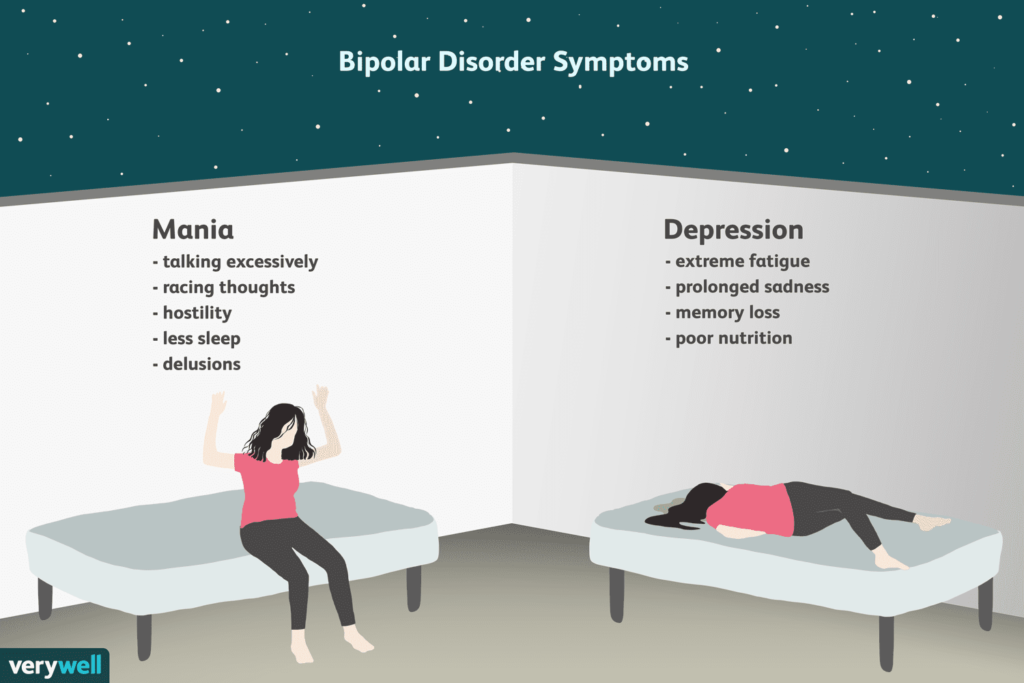
Bipolar disorder, formerly called manic depression, is a mental health condition that causes extreme mood swings. These include emotional highs, also known as mania or hypomania, and lows, also known as depression. Hypomania is less extreme than mania. When you become depressed, you may feel sad or hopeless and lose interest or pleasure in most activities. When your mood shifts to mania or hypomania, you may feel very excited and happy (euphoric), full of energy or unusually irritable. These mood swings can affect sleep, energy, activity, judgment, behavior, and the ability to think clearly.
Episodes of mood swings from depression to mania may occur rarely or multiple times a year. Each bout usually lasts several days. Between episodes, some people have long periods of emotional stability. Others may frequently have mood swings from depression to mania or both depression and mania at the same time. Although bipolar disorder is a lifelong condition, you can manage your mood swings and other symptoms by following a treatment plan. In most cases, healthcare professionals use medicines and talk therapy, also known as psychotherapy, to treat bipolar disorder.
Symptoms
- Excessive happiness, hopefulness and excitement
- Sudden and severe changes in mood
- Restlessness
- Rapid speech and racing thoughts
- Increased energy and less need for sleep
- Increased impulsivity and poor judgment
- Making grand and unattainable plans
- Reckless and risk-taking behavior
- Feeling like you’re unusually important, talented
- Psychosis
Cause
While it’s not known what causes bipolar disorder, these factors may be involved: Biological differences. People with bipolar disorder appear to have physical changes in their brains. The importance of these changes is still uncertain, but more research may help identify why these changes happen. Genetics. Bipolar disorder is more common in people who have a first-degree relative, such as a sibling or parent, with the condition. Researchers are trying to find genes that may cause bipolar disorder.
Risk Factors
Factors that may raise the risk of getting bipolar disorder or cause the first episode include having a first-degree relative, such as a parent or sibling, with bipolar disorder. Periods of high stress, such as the death of a loved one or another traumatic event. Drug or alcohol misuse.
When to see a Doctor
Despite their mood extremes, people with bipolar disorder often don’t know how much being emotionally unstable disrupts their lives and the lives of their loved ones. As a result, they don’t get the treatment they need. If you’re like some people with bipolar disorder, you may enjoy the feelings of euphoria and cycles of being more productive. But an emotional crash always follows this euphoria. This crash can leave you depressed and worn out. It could cause you to have problems getting along with others. It could also leave you in financial or legal trouble. If you have any symptoms of depression or mania, see your healthcare or mental health professional. Bipolar disorder doesn’t get better on its own. A mental health professional with experience in bipolar disorder can help you get your symptoms under control.