
Asthma
What is Asthma ?
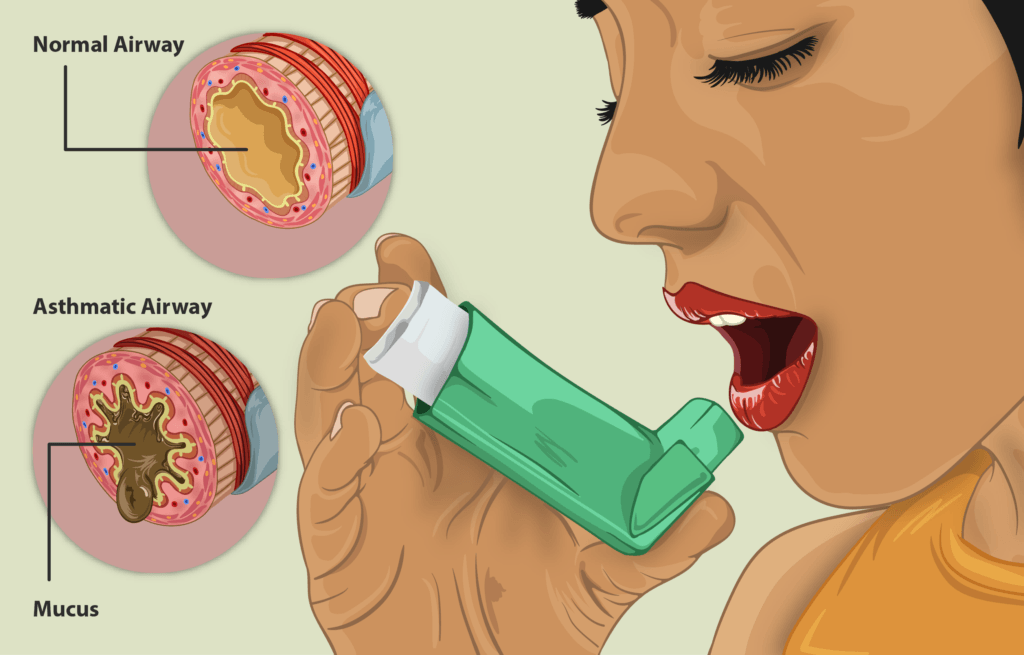
Asthma is a condition in which your airways narrow and swell and may produce extra mucus. This can make breathing difficult and trigger coughing, a whistling sound (wheezing) when you breathe out and shortness of breath.
For some people, asthma is a minor nuisance. For others, it can be a major problem that interferes with daily activities and may lead to a life-threatening asthma attack. Asthma can’t be cured, but its symptoms can be controlled. Because asthma often changes over time, it’s important that you work with your doctor to track your signs and symptoms and adjust your treatment as needed.
Symptoms
- Shortness of breath
- Chest tightness or pain
- Wheezing when exhaling
- Trouble sleeping
- Cold or flu
- Severe coughing
- Serious breathing problems
- Breathing faster
- A fast heartbeat
- Fainting
Cause
Exposure to various irritants and substances that trigger allergies (allergens) can trigger signs and symptoms of asthma. Asthma triggers are different from person to person and can include Airborne allergens, such as pollen, dust mites, mold spores, pet dander or particles of cockroach waste. Respiratory infections, such as the common cold. Physical activity. Cold air. Air pollutants and irritants, such as smoke. Certain medications, including beta blockers, aspirin, and nonsteroidal anti-inflammatory drugs, such as ibuprofen (Advil, Motrin IB, others) and naproxen sodium (Aleve). Strong emotions and stress. Sulfites and preservatives added to some types of foods and beverages, including shrimp, dried fruit, processed potatoes, beer and wine. Gastroesophageal reflux disease (GERD), a condition in which stomach acids back up into your throat
Risk Factors
A number of factors are thought to increase your chances of developing asthma. They include Having a blood relative with asthma, such as a parent or sibling. Having another allergic condition, such as atopic dermatitis — which causes red, itchy skin — or hay fever — which causes a runny nose, congestion and itchy eyes. Being overweight. Being a smoker. Exposure to secondhand smoke. Exposure to exhaust fumes or other types of pollution. Exposure to occupational triggers, such as chemicals used in farming, hairdressing and manufacturing.
When to see a Doctor
Severe asthma attacks can be life-threatening. Work with your doctor to determine what to do when your signs and symptoms worsen — and when you need emergency treatment.