
Acute Sinusitis
What is Acute Sinusitis ?
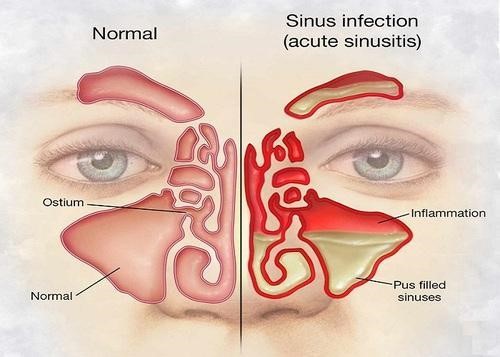
Acute sinusitis causes the spaces inside the nose, known as sinuses, to become inflamed and swollen. Acute sinusitis makes it hard for the sinuses to drain. Mucus builds up. Acute sinusitis can make it hard to breathe through the nose. The area around the eyes and the face might feel swollen. There might be throbbing face pain or a headache.
The common cold is the usual cause of acute sinusitis. Most often, the condition clears up within a week to 10 days unless there’s also an infection caused by bacteria, called a bacterial infection. Home remedies might be all that’s needed to treat acute sinusitis. Sinusitis that lasts more than 12 weeks, even with medical treatment, is called chronic sinusitis.
Symptoms
- Runny nose
- Postnasal drip
- Blocked or stuffy nose
- Pain, tenderness, swelling and pressure around eyes
- Ear pressure
- Headache
- Aching in the teeth
- Changed sense of smell
- Cough
- Bad breath
- Tiredness
- Fever
Cause
Acute sinusitis often happens when you’re getting over a cold. Your sinuses are a series of connected hollow spaces behind your cheekbones, forehead, and nose. Air that comes in through your nose travels through your sinuses on its way to your lungs. Your sinuses are lined with tissue. They also make mucus that keeps the inside of your nose moist. Mucus flowing out of your sinuses also takes care of debris like bacteria or viruses that the air may carry into your nose. Sinusitis happens when bacteria and viruses settle in your sinuses, making their tissues swell. At the same time, your sinuses make more mucus. Normally, mucus flowing away from your sinuses washes away intruders. But when your sinus tissues swell, that mucus becomes trapped. Your sinuses become blocked and fill up with fluid, making your nose feel clogged up or stuffy. Your face may feel tender to the touch, and you may develop a sinus headache.
Risk Factors
The following can raise the risk of getting sinusitis: Hay fever or another allergy that affects the sinuses. A common cold that affects the sinuses. A problem inside the nose, such as a deviated nasal septum, nasal polyps, or tumors. A medical condition, such as cystic fibrosis or an immune system disorder, such as HIV/AIDS. Being around smoke, either from smoking or being around others who smoke, is known as secondhand smoke.
When to see a Doctor
Most people with acute sinusitis don’t need to see a doctor. See a doctor immediately if you have signs or symptoms that may indicate a serious infection.