
Pulmonary Embolism
What is Pulmonary Embolism ?
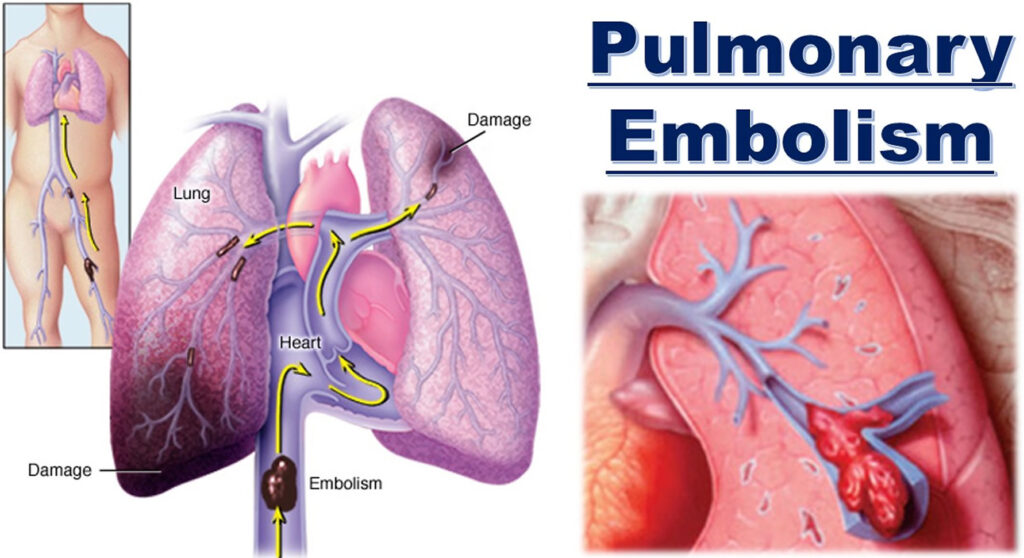
A pulmonary embolism is a blood clot that blocks and stops blood flow to an artery in the lung. In most cases, the blood clot starts in a deep vein in the leg and travels to the lung. Rarely, the clot forms in a vein in another part of the body. When a blood clot forms in one or more of the deep veins in the body, it’s called a deep vein thrombosis (DVT).
Because one or more clots block blood flow to the lungs, pulmonary embolism can be life-threatening. However, prompt treatment greatly reduces the risk of death. Taking measures to prevent blood clots in your legs will help protect you against pulmonary embolism.
Symptoms
- Sudden shortness of breath
- Fast breathing
- Wheezing
- Unexplained sharp pain in your chest, arm, back, shoulder
- Cough with or without bloody mucus
- Pale, clammy or bluish skin
- Rapid heartbeat
- Excessive sweating
- In some cases, feeling anxious, lightheaded or faint
- Fever
Cause
A pulmonary embolism occurs when a clump of material, most often a blood clot, gets stuck in an artery in the lungs, blocking the flow of blood. Blood clots most commonly come from the deep veins of your legs, a condition known as deep vein thrombosis. In many cases, multiple clots are involved. The portions of lung served by each blocked artery can’t get blood and may die. This is known as a pulmonary infarction. This makes it more difficult for your lungs to provide oxygen to the rest of your body. Occasionally, blockages in the blood vessels are caused by substances other than blood clots, such as fat from the inside of a broken long bone, part of a tumor, air bubbles.
Risk Factors
People at risk of developing a PE include those who Have a blood clot in their leg, or deep vein thrombosis (DVT). Are inactive for long periods of time while traveling via motor vehicle, train or plane (such as a long, cross-country car ride). Have recently had trauma or injury to a vein, possibly from surgery, a fracture or varicose veins. Are using hormonal-based contraception (like birth control pills, patches or rings) or hormone replacement therapy. Have a blood clotting disorder. Have a family history of blood clots. Currently smoke. Have diabetes. Have cancer. Are older than 60. Have a history of heart failure, heart attack or stroke. Have overweight (a body mass index or BMI greater than 25) or obesity (a BMI greater than 30). Are pregnant or have given birth in the previous six weeks. Received a central venous catheter through their arm or leg. If you have any of these risk factors and you’ve had a blood clot, talk with your healthcare provider so they can take steps to reduce your risk of PE.
When to see a Doctor
A pulmonary embolism can be life-threatening. Seek urgent medical attention if you experience unexplained shortness of breath, chest pain or fainting.