
Graves' Disease
What is Graves' Disease ?
Graves’ disease is an immune system condition that affects the thyroid gland. It causes the body to make too much thyroid hormone. That condition is called hyperthyroidism.
Thyroid hormones affect many organs in the body. So Graves’ disease symptoms also can affect those organs. Anyone can get Graves’ disease. But it’s more common in women and in people older than 30. Treatment for Graves’ disease helps lower the amount of thyroid hormone that the body makes and eases symptoms.
Symptoms
- Feeling nervous and irritable
- Having a slight tremor of the hands or fingers
- Being sensitive to heat
- Losing weight, despite wanting to eat more
- Having an enlarged thyroid gland, also called goiter
- Having changes in menstrual cycles
- Not being able to get or keep an erection
- Having bowel movements often
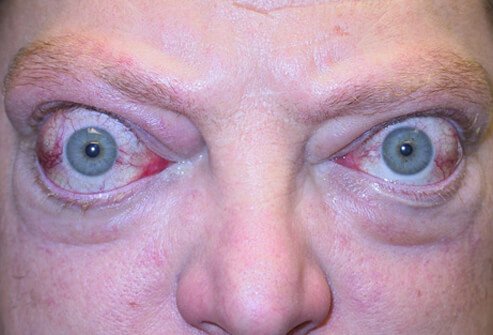
- Having bulging eyes
- Being tired
- Having fast or irregular heartbeat, called palpitations
- Not sleeping well
Cause
Graves’ disease is caused by the body’s disease-fighting immune system not working correctly. Experts don’t know why this happens. The immune system makes antibodies that target viruses, bacteria or other foreign substances. In Graves’ disease, the immune system makes an antibody to one part of the cells in the hormone-making gland in the neck, called the thyroid gland. A tiny gland at the base of the brain, called the pituitary gland, makes a hormone that controls the thyroid gland. The antibody linked with Graves’ disease is called thyrotropin receptor antibody (TRAb). TRAb takes over the work of the pituitary hormone. That leads to more thyroid hormone in the body than the body needs. That condition is called hyperthyroidism.
Risk Factors
Factors that can increase the risk of Graves’ disease include Family history, People who get Graves’ disease often have a family history of thyroid conditions or an autoimmune condition. Sex, Women are much more likely to get Graves’ disease than are men. Age, Graves’ disease mostly happens between the ages of 30 and 60. Another autoimmune condition, People with other conditions of the immune system, such as type 1 diabetes or rheumatoid arthritis, have a higher risk. Smoking, Cigarette smoking, which can affect the immune system, raises the risk of Graves’ disease. People who smoke and have Graves’ disease are at higher risk of getting thyroid eye disease.
When to see a Doctor
Other medical conditions can cause symptoms like those of Graves’ disease. See your healthcare professional if you have any symptoms of Graves’ disease to get a prompt diagnosis. Seek medical care right away if you have heart-related symptoms, such as a fast or irregular heartbeat, or if you have vision loss.