
Type 1 Diabetes
What is Type 1 Diabetes ?
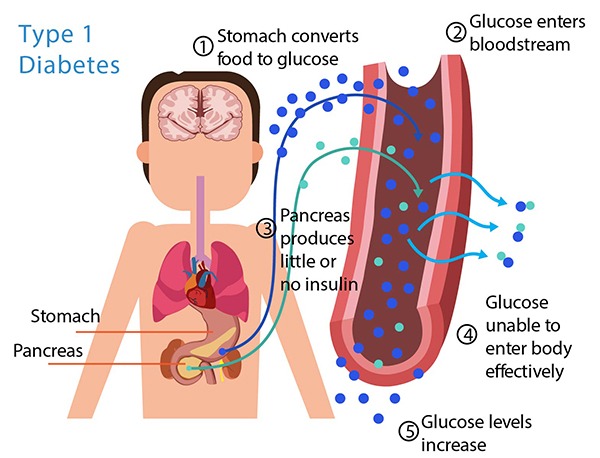
Type 1 diabetes, once known as juvenile diabetes or insulin-dependent diabetes, is a chronic condition. In this condition, the pancreas makes little or no insulin. Insulin is a hormone the body uses to allow sugar (glucose) to enter cells to produce energy.
Different factors, such as genetics and some viruses, may cause type 1 diabetes. Although type 1 diabetes usually appears during childhood or adolescence, it can develop in adults. Even after a lot of research, type 1 diabetes has no cure. Treatment is directed toward managing the amount of sugar in the blood using insulin, diet and lifestyle to prevent complications.
Symptoms
- Excessive thirst
- Frequent urination
- Excessive hunger
- Unexplained weight loss
- Fatigue
- Blurred vision
- Drowsiness
- Slow healing of cuts and sores
- Vaginal yeast infections
- Nausea and vomiting
- Abdominal (stomach) pain
- Rapid breathing
- Confusion
- Loss of consciousness
Cause
Type 1 diabetes develops when your immune system mistakenly attacks and destroys cells in your pancreas that make insulin. This destruction can happen over months or years, ultimately resulting in a total lack (deficiency) of insulin. Although scientists don’t yet know the exact cause of Type 1 diabetes, they believe there’s a strong genetic component. The risk of developing the disease with no family history is approximately 0.4%. If your biological mother has Type 1 diabetes, your risk is 1% to 4%, and your risk is 3% to 8% if your biological father has it. If both of your biological parents have Type 1 diabetes, your risk of developing the condition is as high as 30%. Scientists believe that certain factors, such as a virus or environmental toxins, can trigger your immune system to attack cells in your pancreas if you have a genetic predisposition for developing Type 1 diabetes.
Risk Factors
Some factors that can raise your risk for type 1 diabetes include Family history, Anyone with a parent or sibling with type 1 diabetes has a slightly higher risk of developing the condition. Genetics, Having certain genes increases the risk of developing type 1 diabetes. Geography, The number of people who have type 1 diabetes tends to be higher as you travel away from the equator. Age, Type 1 diabetes can appear at any age, but it appears at two noticeable peaks. The first peak occurs in children between 4 and 7 years old. The second is in children between 10 and 14 years old.
When to see a Doctor
Talk to your health care provider if you notice any of the above symptoms in you or your child.