
HIV AIDS
What is HIV AIDS ?
Acquired immunodeficiency syndrome (AIDS), is an ongoing, also called chronic, condition. It’s caused by the human immunodeficiency virus, also called HIV. HIV damages the immune system so that the body is less able to fight infection and disease. If HIV isn’t treated, it can take years before it weakens the immune system enough to become AIDS. Thanks to treatment, most people in the U.S. don’t get AIDS. HIV is spread through contact with genitals, such as during sex without a condom. This type of infection is called a sexually transmitted infection, also called an STI. HIV also is spread through contact with blood, such as when people share needles or syringes. It is also possible for a person with untreated HIV to spread the virus to a child during pregnancy, childbirth or breastfeeding. There’s no cure for HIV/AIDS. But medicines can control the infection and keep the disease from getting worse. Antiviral treatments for HIV have reduced AIDS deaths around the world. There’s an ongoing effort to make ways to prevent and treat HIV/AIDS more available in resource-poor countries.
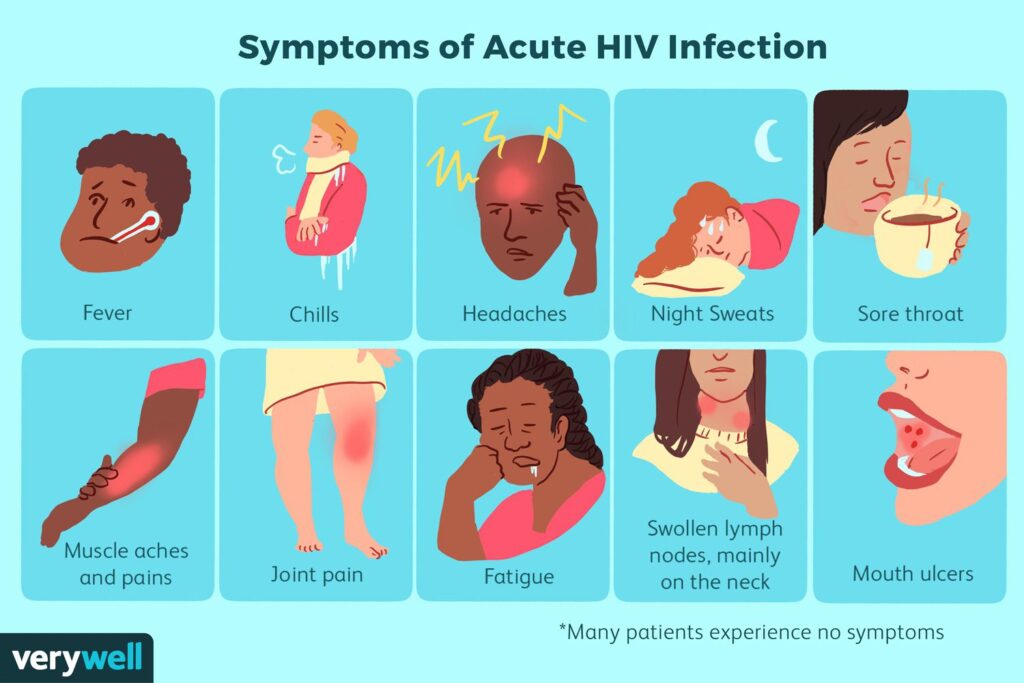
Symptoms
- Fever
- Headache
- Muscle aches and joint pain
- Rash
- Sore throat and painful mouth sores
- Pneumonia
- Swollen lymph nodes
- Diarrhea
- Weight loss
- Cough
- Night sweats
- Fatigue
Cause
HIV is caused by a virus. It can spread through sexual contact, shooting of illicit drugs or use of shared needles, and contact with infected blood. It also can spread from parent to child during pregnancy, childbirth or breastfeeding. HIV destroys white blood cells called CD4 T cells. These cells play a large role in helping the body fight disease. The fewer CD4 T cells you have, the weaker your immune system becomes.
Risk Factors
Anyone of any age, race, sex or sexual orientation can have HIV/AIDS. However, you’re at greatest risk of HIV/AIDS if you Have unprotected sex. Use a new latex or polyurethane condom every time you have sex. Anal sex is riskier than is vaginal sex. Your risk of HIV increases if you have more than one sexual partner. Have an STI. Many STIs cause open sores on the genitals. These sores allow HIV to enter the body. Inject illicit drugs. If you share needles and syringes, you can be exposed to infected blood.
When to see a Doctor
If you think you may have been infected with HIV or are at risk of contracting the virus, see a healthcare professional as soon as you can.