
Endometriosis
What is Endometriosis ?
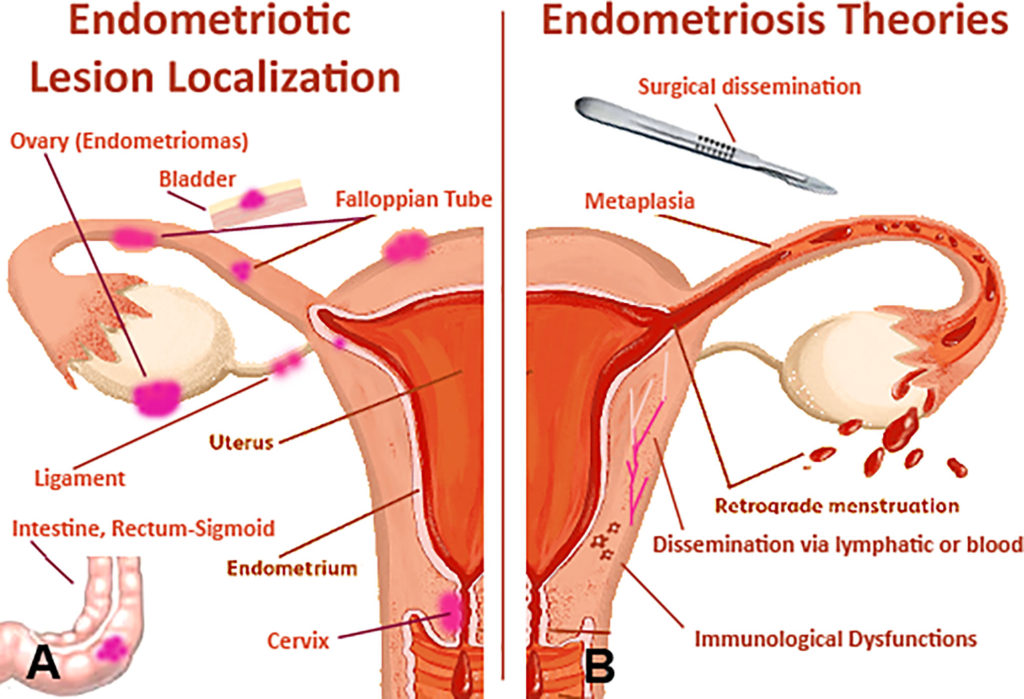
Endometriosis (en-doe-me-tree-O-sis) is an often-painful condition in which tissue that is similar to the inner lining of the uterus grows outside the uterus. It often affects the ovaries, fallopian tubes and the tissue lining the pelvis. Rarely, endometriosis growths may be found beyond the area where pelvic organs are located.
Endometriosis tissue acts as the lining inside the uterus would — it thickens, breaks down and bleeds with each menstrual cycle. But it grows in places where it doesn’t belong, and it doesn’t leave the body. When endometriosis involves the ovaries, cysts called endometriomas may form. Surrounding tissue can become irritated and form scar tissue. Bands of fibrous tissue called adhesions also may form. These can cause pelvic tissues and organs to stick to each other. Endometriosis can cause pain, especially during menstrual periods. Fertility problems also may develop. But treatments can help you take charge of the condition and its complications.
Symptoms
- Very painful menstrual cramps
- Heavy bleeding during periods
- Pain during sex
- Infertility
- Pain when pooping or peeing
- Stomach problems
- Fatigue
- Swelling in the Legs
- Pain in the Back
- Other signs and symptoms
Cause
Healthcare providers don’t know for sure what causes endometriosis. When you have endometriosis, tissue that is similar to the lining of your uterus grows in the wrong places. Researchers are looking for a connection between endometriosis and conditions like retrograde menstruation, immune system conditions and hormone disorders as possible factors that may lead to the condition.
Risk Factors
Factors that raise the risk of endometriosis include : Never giving birth. Starting your period at an early age. Going through menopause at an older age. Short menstrual cycles — for instance, less than 27 days. Heavy menstrual periods that last longer than seven days. Having higher levels of estrogen in your body or a greater lifetime exposure to estrogen your body produces. Low body mass index. One or more relatives with endometriosis, such as a mother, aunt or sister.
When to see a Doctor
See your doctor if you have signs and symptoms that may indicate endometriosis. Endometriosis can be a challenging condition to manage. An early diagnosis, a multidisciplinary medical team and an understanding of your diagnosis may result in better management of your symptoms.