
Conjoined Twins
What is Conjoined Twins ?
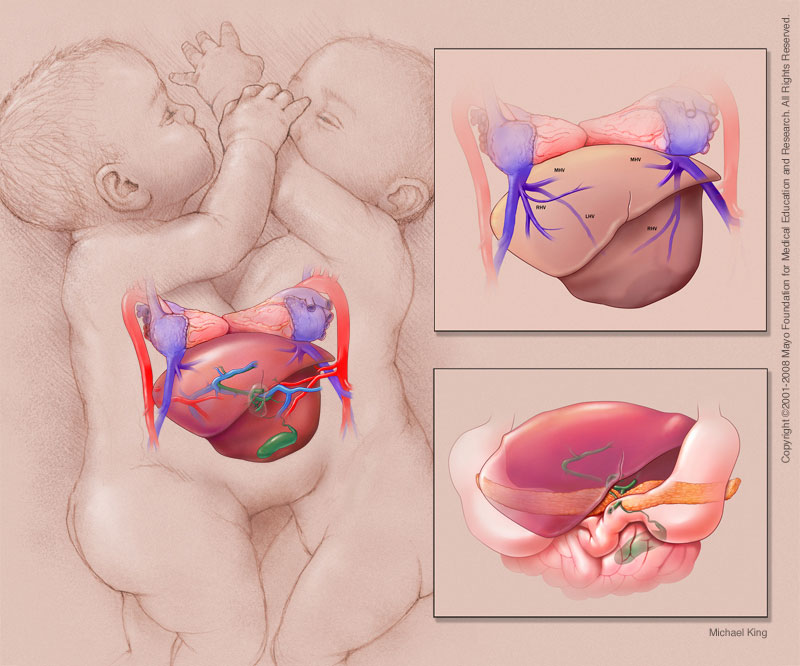
Conjoined twins are two babies who are born physically connected to each other. Conjoined twins develop when an early embryo only partially separates to form two individuals. Although two babies develop from this embryo, they remain physically connected — most often at the chest, abdomen or pelvis. Conjoined twins may also share one or more internal body organs.
Though many conjoined twins are not alive when born (stillborn) or die shortly after birth, advances in surgery and technology have improved survival rates. Some surviving conjoined twins can be surgically separated. The success of surgery depends on where the twins are joined and how many and which organs are shared. It also depends on the experience and skill of the surgical team.
Symptoms
- Nausea
- Severe breast pain and tenderness
- Visible joining
- Difficulty differentiating fetal heads
- Shared organs
- Large uterus
- Visible bump
- Limited mobility
- Unusual fetal heart sounds
- Excess amniotic fluid
Cause
Identical twins (monozygotic twins) occur when a single fertilized egg splits and develops into two individuals. Eight to 12 days after conception, the embryonic layers that split to form monozygotic twins begin to develop into specific organs and structures. It’s believed that when the embryo splits later than this — usually between 13 and 15 days after conception — separation stops before the process is complete. The resulting twins are conjoined. An alternative theory suggests that two separate embryos may somehow fuse together in early development. What might cause either chain of events to occur is unknown.
Risk Factors
Because conjoined twins are so rare, and the cause isn’t clear, it’s unknown what might make some couples more likely to have conjoined twins.
When to see a Doctor
Conjoined twins can be identified as early as 12 weeks prenatally through imaging tests, including Ultrasound, MRI. If imaging tests show that twins are conjoined, healthcare providers will try to predict potential complications. Then they’ll make a plan to address them at the time of birth.