
Urinary Incontinence
What is Urinary Incontinence ?
Urinary incontinence — the loss of bladder control — is a common and often embarrassing problem. The severity ranges from occasionally leaking urine when you cough or sneeze to having an urge to urinate that’s so sudden and strong you don’t get to a toilet in time.
Though it occurs more often as people get older, urinary incontinence isn’t an inevitable consequence of aging. If urinary incontinence affects your daily activities, don’t hesitate to see your doctor. For most people, simple lifestyle and dietary changes or medical care can treat symptoms of urinary incontinence.
Symptoms
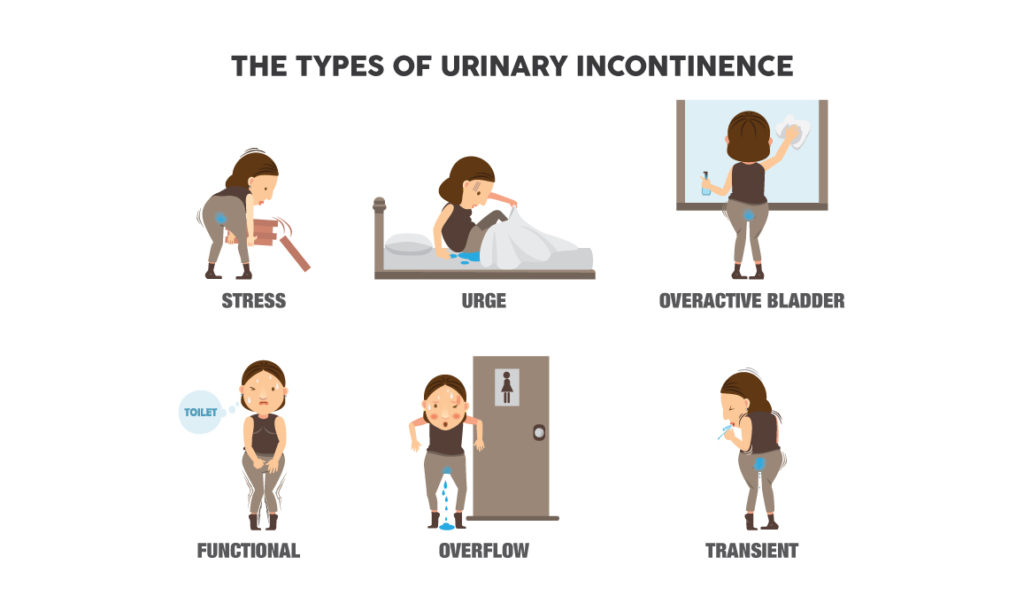
- Stress incontinence
- Urge incontinence
- Overflow incontinence
- Functional incontinence
- Mixed incontinence
- Peeing more than eight times a day
- Feeling of incomplete bladder emptying
- Waking up to pee more than twice
- Wetting the bed
- Dribbling of urine
Cause
Anyone can get incontinence. But it’s more common in certain groups of people and at certain times in your life. In females, incontinence often relates to Pregnancy, Childbirth, Menopause. Each of these can cause your pelvic floor muscles to weaken over time and make changes to your bladder that might lead to incontinence.
Risk Factors
Factors that increase your risk of developing urinary incontinence include Gender; Women are more likely to have stress incontinence. Pregnancy, childbirth, menopause, and normal female anatomy account for this difference. However, men who have prostate gland problems are at increased risk of urge and overflow incontinence. Age, as you get older, the muscles in your bladder and urethra lose some of their strength. Changes with age reduce how much your bladder can hold and increase the chances of involuntary urine release. Being overweight, Extra weight increases pressure on your bladder and surrounding muscles, which weakens them and allows urine to leak out when you cough or sneeze. Smoking and tobacco use may increase your risk of urinary incontinence. Family history, if a close family member has urinary incontinence, especially urge incontinence, your risk of developing the condition is higher. Some diseases, Neurological disease or diabetes, may increase your risk of incontinence.
When to see a Doctor
You may feel uncomfortable discussing incontinence with your doctor. But if incontinence is frequent or is affecting your quality of life, it’s important to seek medical advice because urinary incontinence may cause you to restrict your activities and limit your social interactions, negatively impact your quality of life, increase the risk of falls in older adults as they rush to the toilet, indicate a more serious underlying condition.