
Diabetic Nephropathy
What is Diabetic Nephropathy ?
Diabetic nephropathy is a serious complication of type 1 diabetes and type 2 diabetes. It’s also called diabetic kidney disease. In the United States, about 1 in 3 people living with diabetes have diabetic nephropathy. Diabetic nephropathy affects the kidneys’ usual work of removing waste products and extra fluid from the body. The best way to prevent or delay diabetic nephropathy is by living a healthy lifestyle and keeping diabetes and high blood pressure managed.
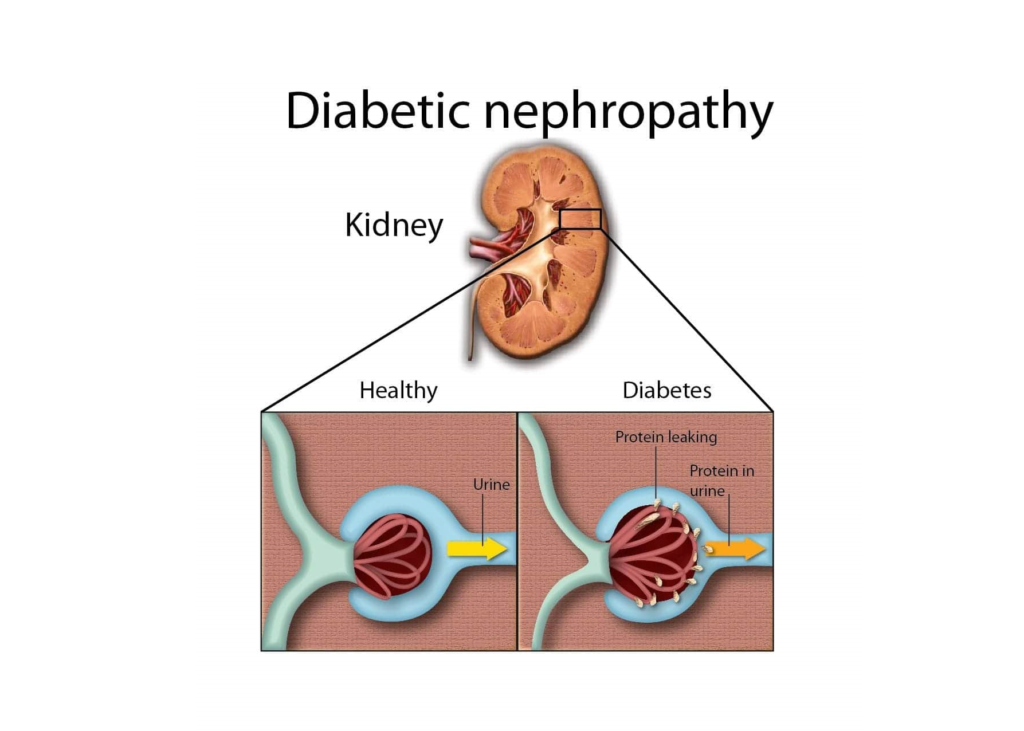
Over years, diabetic nephropathy slowly damages the kidneys’ filtering system. Early treatment may prevent this condition or slow it and lower the chance of complications. Diabetic kidney disease can lead to kidney failure. This also is called end-stage kidney disease. Kidney failure is a life-threatening condition. Treatment options for kidney failure are dialysis or a kidney transplant.
Symptoms
- Worsening blood pressure control
- Protein in the urine
- Swelling of feet, ankles, hands or eyes
- Increased need to urinate
- Reduced need for insulin or diabetes medicine
- Confusion or difficulty concentrating
- Shortness of breath
- Loss of appetite
- Nausea and vomiting
- Persistent itching
- Fatigue
- Foamy urine
Cause
Diabetic nephropathy is a common complication of type 1 and type 2 diabetes. Over time, diabetes that isn’t well controlled can damage blood vessels in the kidneys that filter waste from the blood. This can lead to kidney damage and cause high blood pressure. High blood pressure can cause more kidney damage by raising the pressure in the filtering system of the kidneys.
Risk Factors
If you have diabetes, the following can raise your risk of diabetic nephropathy: Uncontrolled high blood sugar, also called hyperglycemia. Uncontrolled high blood pressure, also called hypertension. Smoking. High blood cholesterol. Obesity. A family history of diabetes and kidney disease.
When to see a Doctor
Make an appointment with your health care professional if you have symptoms of kidney disease. If you have diabetes, visit your health care professional yearly or as often as you’re told for tests that measure how well your kidneys are working.