
Amyloidosis
What is Amyloidosis ?
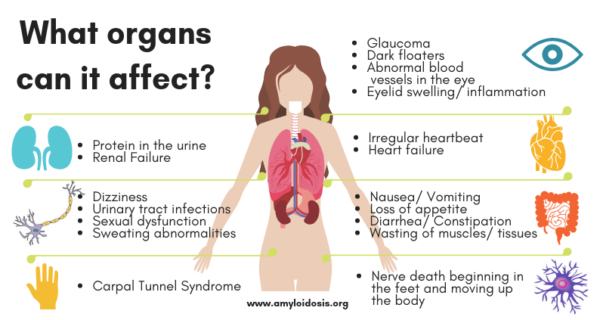
Amyloidosis (am-uh-loi-DO-sis) is a rare disease that occurs when an abnormal protein, called amyloid, builds up in your organs and interferes with their normal function. Amyloid isn’t normally found in the body, but it can be formed from several different types of protein. Organs that may be affected include the heart, kidneys, liver, spleen, nervous system, and digestive tract.
Some varieties of amyloidosis occur in association with other diseases. These types may improve with treatment of the underlying disease. Some varieties of amyloidosis may lead to life-threatening organ failure. Treatments may include chemotherapy similar to that used to combat cancer. Your doctor may recommend medications to reduce amyloid production and manage symptoms. Some people may benefit from organ or stem cell transplants.
Symptoms
- Swelling of your ankles and legs
- Severe fatigue
- Shortness of breath with minimal exertion
- Unable to lie flat in bed due to shortness of breath
- Numbness, tingling or pain in your hands or feet, especially pain in your wris
- Diarrhea, possibly with blood, or constipation
- Unintentional weight loss of more than 4.5 kilograms
- An enlarged tongue, which sometimes looks rippled around its edge
- Skin changes, such as thickening or easy bruising, and purplish patches around the eyes
- An irregular heartbeat
- Difficulty swallowing
- General weakness or weak grip
Cause
Amyloidosis happens when proteins in your body become misshapen and sticky. They make clumps, or fibrils, that land on organs and tissues. Healthcare providers call amyloidosis a “protein misfolding disorder.” Instead of being neat, long chains that your body can break down, the fibrils get stuck in organs and cause problems. Causes of amyloidosis include:
Gene changes (mutations). You may inherit a change (mutation) in the gene that makes abnormal amyloid proteins. These mutations can happen during a person’s lifetime for unknown reasons.
Underlying conditions. Amyloidosis may happen because of a separate condition. This is the case with AA amyloidosis. It’s more common in people with conditions that cause long-term inflammation, like long-term infections or rheumatoid arthritis.
Risk Factors
Factors that increase your risk of amyloidosis include Age : Most people diagnosed with amyloidosis are 60 or older. Sex : Amyloidosis is more common in men. Race : In the U.S., people who are Black are more likely to inherit the gene mutation that causes the hereditary type of ATTR amyloidosis. Other conditions : Having a condition that causes chronic inflammation increases your risk of AA amyloidosis. Between 12% and 15% of people who develop AL also have multiple myeloma, a type of blood cancer. Long-term dialysis : Some forms of amyloidosis occur in people with chronic kidney disease who’ve received dialysis treatment for a long time. Family history of amyloidosis : Some forms of amyloidosis run in families.
When to see a Doctor
See your health care provider if you regularly experience any of the signs or symptoms associated with amyloidosis.