
Hemochromatosis
What is Hemochromatosis ?
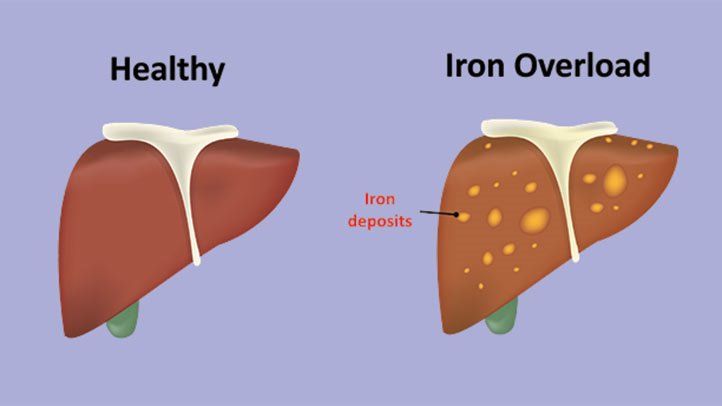
Hemochromatosis (he-moe-kroe-muh-TOE-sis) is a condition that causes the body to absorb too much iron from food. Excess iron is stored in the organs, especially the liver, heart, and pancreas. Too much iron can lead to life-threatening conditions, such as liver disease, heart problems, and diabetes.
There are a few types of hemochromatosis, but the most common type is caused by a gene change passed down through families. Only a few people who have the genes ever develop serious problems. Symptoms usually appear in midlife. Treatment includes regularly removing blood from the body. Because much of the body’s iron is contained in red blood cells, this treatment lowers iron levels.
Symptoms
- Joint pain
- Belly pain
- Fatigue
- Weakness
- Diabetes
- Loss of sex drive
- Impotence
- Heart failure
- Liver failure
- Bronze or gray skin color
- Memory fog
- Unexplained weight loss
Cause
There are two types of hemochromatosis, each with different causes. An inherited genetic change is the most common cause. It’s called primary hemochromatosis, hereditary hemochromatosis, or classical hemochromatosis. With primary hemochromatosis, problems with the DNA come from both parents and cause the body to absorb too much iron.
In secondary hemochromatosis, medical treatments or other medical conditions cause the iron overload. Examples include Anemia (low amount of red blood cells), Blood transfusions, Iron pills or injections, Kidney dialysis over a long period, Liver disease, such as hepatitis C infection or fatty liver disease.
Risk Factors
Factors that increase the risk of hemochromatosis include having two copies of an altered HFE gene. This is the greatest risk factor for hereditary hemochromatosis. Family history: Having a parent or sibling with hemochromatosis increases the likelihood of developing the disease. Ethnicity, People of Northern European descent are more prone to hereditary hemochromatosis than are people of other ethnic backgrounds. Hemochromatosis is less common in people of Black, Hispanic, and Asian ancestry. Sex, Men are more likely than women to develop symptoms of hemochromatosis at an earlier age. Because women lose iron through menstruation and pregnancy, they tend to store less of the mineral than men do. After menopause or a hysterectomy, the risk increases for women.
When to see a Doctor
See your doctor if you experience any of the signs and symptoms of hereditary hemochromatosis. If you have an immediate family member who has hemochromatosis, ask your doctor about genetic tests that can determine if you have inherited the gene that increases your risk of hemochromatosis.