
Myocardial Infarction
What is Myocardial Infarction ?
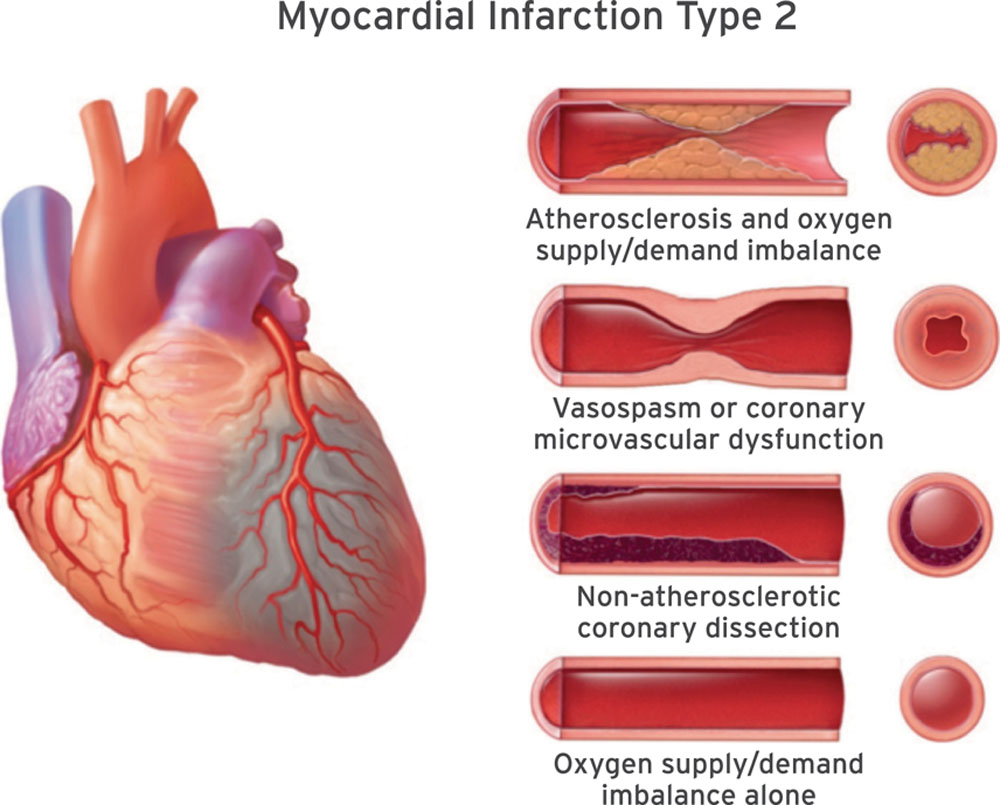
A heart attack occurs when the flow of blood to the heart is severely reduced or blocked. The blockage is usually due to a buildup of fat, cholesterol and other substances in the heart (coronary) arteries. The fatty, cholesterol-containing deposits are called plaques. The process of plaque buildup is called atherosclerosis.
Sometimes, a plaque can rupture and form a clot that blocks blood flow. A lack of blood flow can damage or destroy part of the heart muscle.
Symptoms
- Chest pain that may feel like pressure, tightness, pain, squeezing or aching
- Pain or discomfort that spreads to the shoulder, arm, back, neck, jaw, teeth or sometimes the upper belly
- Cold sweat
- Fatigue
- Trouble sleeping (insomnia)
- Heartburn or indigestion
- Lightheadedness or sudden dizziness
- Nausea
- Shortness of breath
- Heart palpitations
Cause
Most heart attacks happen because of a blockage in one of the blood vessels that supply your heart. Most often, this occurs because of plaque, a sticky substance that can build up on the insides of your arteries (similar to how pouring grease down your kitchen sink can clog your home plumbing). That buildup is called atherosclerosis. When there’s a large amount of this atherosclerotic buildup in the blood vessels to your heart, this is called coronary artery disease. Sometimes, plaque deposits inside the coronary (heart) arteries can break open or rupture, and a blood clot can get stuck where the rupture happened. If the clot blocks the artery, this can deprive the heart muscle of blood and cause a heart attack.
Risk Factors
Men age 45 and older and women age 55 and older are more likely to have a heart attack than are younger men and women. This includes smoking and long-term exposure to secondhand smoke. If you smoke, quit. Over time, high blood pressure can damage arteries that lead to the heart. A high level of low-density lipoprotein (LDL) cholesterol (the “bad” cholesterol) is most likely to narrow arteries. Obesity is linked with high blood pressure, diabetes, high levels of triglycerides and bad cholesterol, and low levels of good cholesterol. Diabetes. Metabolic syndrome. Family history of heart attacks. Not enough exercise. Unhealthy diet. Stress. Illegal drug use. A history of preeclampsia. An autoimmune condition.
When to see a Doctor
Act immediately. Some people wait too long because they don’t recognize the important signs and symptoms.