
Cardiac Arrhythmia
What is Cardiac Arrhythmia ?
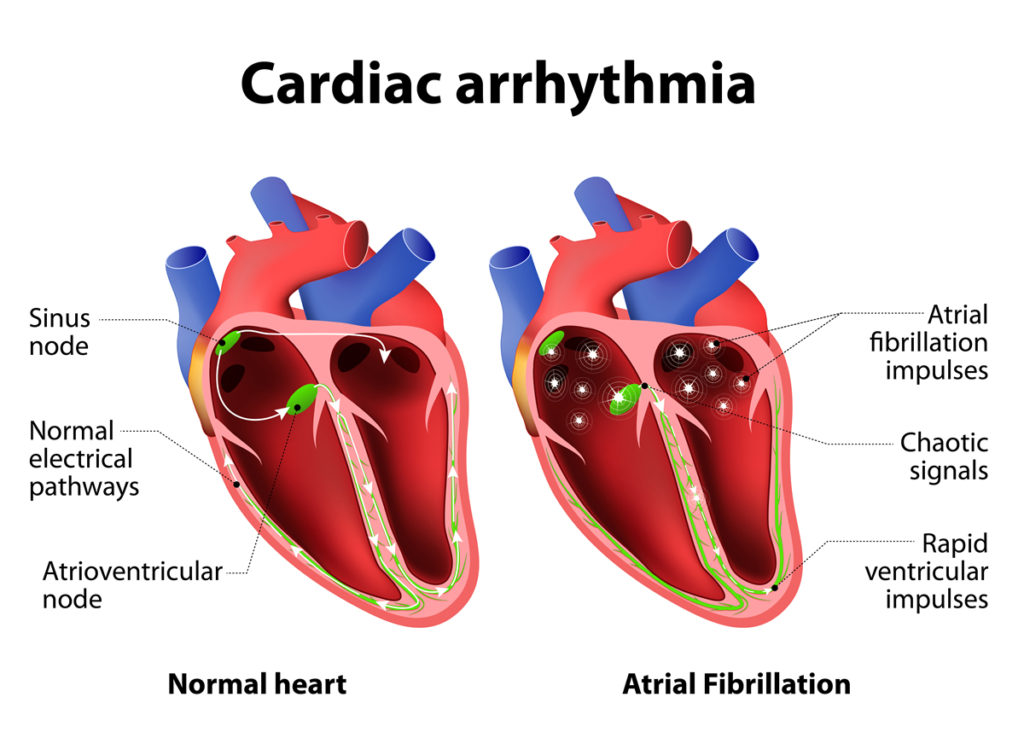
A heart arrhythmia is an irregular heartbeat. A heart arrhythmia occurs when the electrical signals that tell the heart to beat don’t work properly. The heart may beat too fast or too slow. Or the pattern of the heartbeat may be inconsistent. A heart arrhythmia may feel like a fluttering, pounding or racing heartbeat. Some heart arrhythmias are harmless. Others may cause life-threatening symptoms. There are times when it is OK to have a fast or slow heartbeat. For example, the heart may beat faster with exercise or slow down during sleep.
Heart arrhythmia treatment may include medicines, devices such as pacemakers, or a procedure or surgery. The goals of treatment are to control or get rid of fast, slow or otherwise irregular heartbeats. A heart-healthy lifestyle can help prevent heart damage that can trigger some heart arrhythmias.
Symptoms
- A fluttering, pounding, racing feeling in chest.
- A fast heartbeat.
- A slow heartbeat.
- Chest pain.
- Shortness of breath.
- Anxiety.
- Feeling very tired.
- Lightheadedness or dizziness.
- Sweating.
- Fainting or almost fainting.
Cause
In a healthy heart, the heart signaling process usually goes smoothly, resulting in a resting heart rate of 60 to 100 beats a minute. But some things can change how electrical signals travel through the heart and cause arrhythmias. They include A heart attack or scarring from a previous heart attack. Blocked arteries in the heart, called coronary artery disease. Changes to the heart’s structure, such as from cardiomyopathy. Diabetes. High blood pressure. Infection with COVID-19. Overactive or underactive thyroid gland. Sleep apnea. Some medicines, including those used to treat colds and allergies. Drinking too much alcohol or caffeine. Illegal drug use or drug misuse. Genetics. Smoking. Stress or anxiety.
Risk Factors
Risk factors for arrhythmia include Using tobacco products. Drinking alcohol. Consuming drinks and foods that have caffeine. Taking stimulants like cold medicines or herbal supplements. Having high blood pressure. Having a BMI (body mass index) higher than 30. Having high blood sugar. Having sleep apnea.
When to see a Doctor
If you feel like your heart is beating too fast or too slow, or it’s skipping a beat, make an appointment for a health checkup. You may be told to see a doctor trained in heart diseases, called a cardiologist.