
Lung Cancer
What is Lung Cancer ?
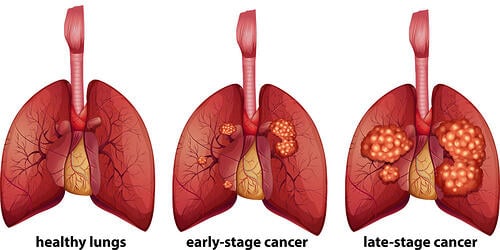
Lung cancer is a type of cancer that begins in the lungs. Your lungs are two spongy organs in your chest that take in oxygen when you inhale and release carbon dioxide when you exhale. Lung cancer is the leading cause of cancer deaths worldwide.
People who smoke have the greatest risk of lung cancer, though lung cancer can also occur in people who have never smoked. The risk of lung cancer increases with the length of time and number of cigarettes you’ve smoked. If you quit smoking, even after smoking for many years, you can significantly reduce your chances of developing lung cancer.
Symptoms
- A new cough that doesn't go away
- Chest pain
- Coughing up blood, even a small amount
- Hoarseness
- Shortness of breath
- Wheezing
- Bone pain
- Headache
- Losing weight without trying
- Loss of appetite
- Swelling in the face or neck
- Shoulder pain
Cause
Lung cancer happens when cells in the lungs develop changes in their DNA. A cell’s DNA holds the instructions that tell a cell what to do. In healthy cells, the DNA gives instructions to grow and multiply at a set rate. The instructions tell the cells to die at a set time. In cancer cells, the DNA changes give different instructions. The changes tell the cancer cells to make many more cells quickly. Cancer cells can keep living when healthy cells would die. This causes too many cells. The cancer cells might form a mass called a tumor. The tumor can grow to invade and destroy healthy body tissue. In time, cancer cells can break away and spread to other parts of the body. When cancer spreads, it’s called metastatic cancer. Smoking causes most lung cancers. It can cause lung cancer in both people who smoke and in people exposed to secondhand smoke. But lung cancer also happens in people who never smoked or been exposed to secondhand smoke. In these people, there may be no clear cause of lung cancer.
Risk Factors
While there are many factors that can increase your risk of lung cancer, smoking any kind of tobacco products, including cigarettes, cigars or pipes is the biggest single risk factor. Experts estimate that 80% of lung cancer deaths are smoking-related. Other risk factors include Being exposed to secondhand tobacco smoke. Being exposed to harmful substances, like air pollution, radon, asbestos, uranium, diesel exhaust, silica, coal products and others. Having previous radiation treatments to your chest (for instance, for breast cancer or lymphoma). Having a family history of lung cancer.
When to see a Doctor
Make an appointment with your doctor or other healthcare professional if you have any symptoms that worry you. If you smoke and haven’t been able to quit, make an appointment. Your healthcare professional can recommend strategies for quitting smoking. These may include counseling, medicines and nicotine replacement products.