
Cluster Headache
What is Cluster Headache ?
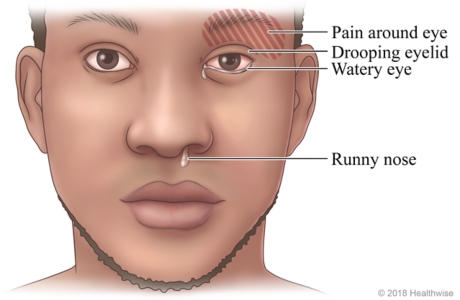
Cluster headache is a very painful type of headache. It usually occurs in periods of frequent attacks known as clusters. Cluster headaches can wake people from sleep. These headaches cause intense pain in or around one eye on one side of the head.
Cluster periods can last from weeks to months. Then usually the headaches stop for a period of time, which may last for months or years. Cluster headache is rare. Treatments can shorten cluster headache attacks and lessen the pain. Also, medicines can reduce the number of cluster headaches.
Symptoms
- Extreme sharp or stabbing pain
- Pain on one side of the head in a single cluster
- Restlessness
- A lot of tears
- Redness of the eye on the side that hurts
- Stuffy or runny nose on the side that hurts
- Forehead or facial sweating
- Skin color changes on the side of the face that hurts
- Swelling around the eye on the side that hurts
- Drooping eyelid on the side that hurts
Cause
Healthcare providers don’t know the exact cause of cluster headaches. Research found that they could relate to your body releasing the following near the trigeminal nerve that sends sensations between your face and brain a chemical that helps in allergic reaction response (histamine). A chemical that carries messages between nerve cells (serotonin). In addition, research found that cluster headaches may happen if there’s dysfunction in the area of your brain called the hypothalamus. Research also found that cluster headaches can be genetic in up to 5% of people. Studies are ongoing to learn more about the causes of cluster headaches.
Risk Factors
Risk factors for cluster headache include Sex. Men are more likely to have cluster headaches than women are. Age. Most people who develop cluster headaches are between the ages of 20 and 50. But the condition can start at any age. Smoking. Many people who get cluster headaches are smokers. But quitting smoking usually doesn’t stop the headaches. Alcohol use. If you have cluster headaches, drinking alcohol during a cluster period may increase the risk of an attack. Family history. Having a parent, brother, or sister who has cluster headaches might increase the risk.
When to see a Doctor
See your doctor if you’ve just started to have cluster headaches to rule out other disorders and to find the most effective treatment. Headache pain, even when severe, usually isn’t the result of an underlying disease.