
Muscular Dystrophy
What is Muscular Dystrophy ?
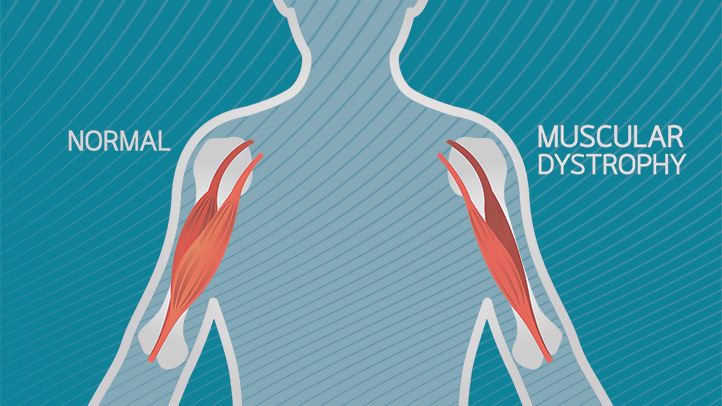
Muscular dystrophy is a group of diseases that cause progressive weakness and loss of muscle mass. In muscular dystrophy, abnormal genes (mutations) interfere with the production of proteins needed to form healthy muscle.
There are many kinds of muscular dystrophy. Symptoms of the most common variety begin in childhood, mostly in boys. Other types don’t surface until adulthood. There’s no cure for muscular dystrophy. But medications and therapy can help manage symptoms and slow the course of the disease.
Symptoms
- Frequent falls
- Difficulty rising from a lying or sitting position
- Trouble running and jumping
- Waddling gait
- Walking on the toes
- Large calf muscles
- Muscle pain and stiffness
- Learning disabilities
- Delayed growth
- Muscle atrophy
- Fatigue
- Muscle pain
Cause
Mutations (changes) in the genes that are responsible for healthy muscle structure and function cause muscular dystrophy. The mutations mean that the cells that would normally maintain your muscles can no longer fulfill this role, leading to progressive muscle weakness.
There are several genes — and possible genetic mutations — that play a role in muscle function. This is why there are so many different forms of muscular dystrophy.
In the majority of muscular dystrophy cases, you inherit the genetic mutation from one or both of your biological parents.
Risk Factors
Muscular dystrophy occurs in both sexes and in all ages and races. However, the most common variety, Duchenne, usually occurs in young boys. People with a family history of muscular dystrophy are at higher risk of developing the disease or passing it on to their children.
When to see a Doctor
Seek medical advice if you notice signs of muscle weakness — such as increased clumsiness and falling — in you or your child.