
Uterine Fibroids
What is Uterine Fibroids ?
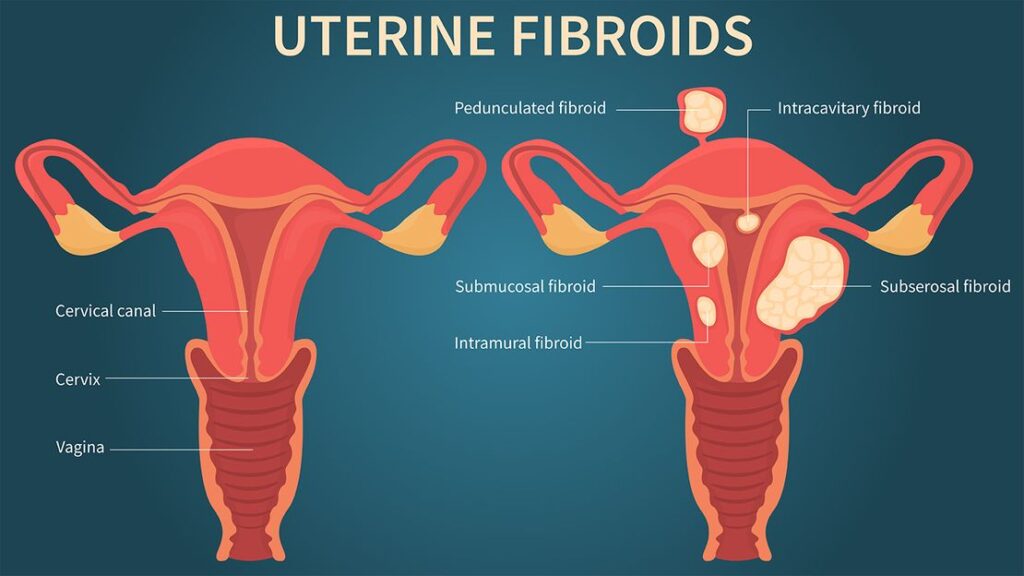
Uterine fibroids are common growths of the uterus. They often appear during the years you’re usually able to get pregnant and give birth. Uterine fibroids are not cancer, and they almost never turn into cancer. They aren’t linked with a higher risk of other types of cancer in the uterus either. They’re also called leiomyomas (lie-o-my-O-muhs) or myomas.
Fibroids vary in number and size. You can have a single fibroid or more than one. Some of these growths are too small to see with the eyes. Others can grow to the size of a grapefruit or larger. A fibroid that gets very big can distort the inside and the outside of the uterus. In extreme cases, some fibroids grow large enough to fill the pelvis or stomach area. They can make a person look pregnant. Many people have uterine fibroids sometime during their lives. But you might not know you have them, because they often cause no symptoms. Your health care professional may just happen to find fibroids during a pelvic exam or pregnancy ultrasound.
Symptoms
- Heavy menstrual bleeding or painful periods
- Longer or more frequent periods
- Pelvic pressure or pain
- Frequent urination or trouble urinating
- Growing stomach area
- Inability to pee
- Constipation
- Pain in the stomach area/lower back
- A feeling of fullness in your lower belly
- Pain during sex
- Long-term (chronic) vaginal discharge
- Increased abdominal distention
Cause
The exact cause of uterine fibroids isn’t clear. But these factors may play roles, Gene changes. Many fibroids contain changes in genes that differ from those in typical uterine muscle cells. Hormones. Two hormones called estrogen and progesterone cause the tissue the lines the inside of the uterus to thicken during each menstrual cycle to prepare for pregnancy. These hormones also seem to help fibroids grow. Fibroids contain more cells that estrogen and progesterone bind to than do typical uterine muscle cells. Fibroids tend to shrink after menopause due to a drop in hormone levels. Other growth factors. Substances that help the body maintain tissues, such as insulin-like growth factor, may affect fibroid growth. Extracellular matrix (ECM). This material makes cells stick together, like mortar between bricks. ECM is increased in fibroids and makes them fibrous. ECM also stores growth factors and causes biologic changes in the cells themselves.
Risk Factors
There are few known risk factors for uterine fibroids, other than being a person of reproductive age. These include Race. All people of reproductive age who were born female could develop fibroids. But Black people are more likely to have fibroids than are people of other racial groups. Black people have fibroids at younger ages than do white people. They’re also likely to have more or larger fibroids, along with worse symptoms, than do white people. Family history. If your mother or sister had fibroids, you’re at higher risk of getting them. Other factors. Starting your period before the age of 10; obesity; being low on vitamin D; having a diet higher in red meat and lower in green vegetables, fruit and dairy; and drinking alcohol, including beer, seem to raise your risk of getting fibroids.
When to see a Doctor
See your doctor if you have pelvic pain that doesn’t go away. Heavy or painful periods that limit what you can do. Spotting or bleeding between periods. Trouble emptying your bladder. Ongoing tiredness and weakness, which can be symptoms of anemia, meaning a low level of red blood cells. Get medical care right away if you have severe bleeding from the vagina or sharp pelvic pain that comes on fast.