
Peptic Ulcer
What is Peptic Ulcer ?
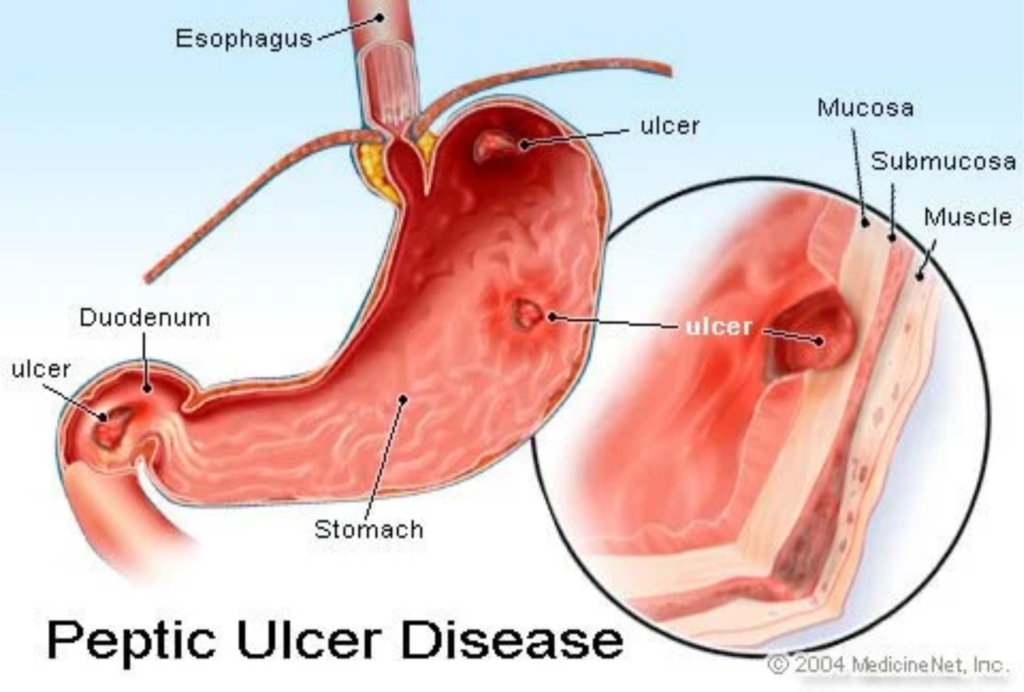
Peptic ulcers are open sores on the inner lining of the stomach and the upper part of the small intestine. The most common symptom of a peptic ulcer is stomach pain.
Peptic ulcers include:
- Gastric ulcers, which appear on the inside of the stomach.
- Duodenal ulcers, which appear on the inside of the upper part of the small intestine, called the duodenum.
The most common causes of peptic ulcers are infection with the germ Helicobacter pylori (H. pylori) and long-term use of nonsteroidal anti-inflammatory drugs (NSAIDs). These include ibuprofen (Advil, Motrin IB, others) and naproxen sodium (Aleve). Stress and spicy foods do not cause peptic ulcers. But they can make symptoms worse.
Symptoms
- Dull or burning stomach pain
- Feeling of fullness or bloating
- Belching
- Heartburn
- Nausea
- Fever and chills
- Vomiting blood
- Having dark blood in stools
- Feeling dizzy or fainting
- Black, tarry stool
- Pallor (paleness)
- Rapid heart rate
Cause
Peptic ulcers happen when acid in the organs that food travels through, called the digestive tract, eats away at the inner surface of the stomach or small intestine. The acid can create a painful open sore that may bleed. Your digestive tract is coated with a mucous layer that most often protects against acid. But if the amount of acid increases or the amount of mucus decreases, you could develop an ulcer. Common causes include Helicobacter pylori. This germ lives in the mucous layer that covers and protects tissues that line the stomach and small intestine. The H. pylori germ often causes no problems. But it can cause swelling and irritation, called inflammation, of the stomach’s inner layer. When this happens, it can cause an ulcer. Regular use of certain pain relievers. Taking aspirin or nonsteroidal anti-inflammatory drugs (NSAIDs) over time can irritate or inflame the lining of the stomach and small intestine. These medicines include ibuprofen (Advil, Motrin IB, others), naproxen sodium (Aleve, Anaprox DS, others), ketoprofen and others. They do not include acetaminophen (Tylenol, others).
Risk Factors
You’re more likely to get peptic ulcer disease if you have an H. pylori infection or use NSAIDs regularly, especially if you have both risk factors. Even if H. pylori hasn’t overgrown yet or you haven’t taken too many NSAIDs yet, these factors can combine to cause PUD. Other factors that may contribute include smoking, alcohol use and other medications you might be taking. While these factors aren’t enough to cause PUD all on their own, they can combine with H. pylori infection or NSAID use to make peptic ulcer disease more likely.
When to see a Doctor
See your healthcare professional if you’re vomiting blood, having dark blood in stools or are feeling dizzy. Also see your healthcare professional if nonprescription antacids and acid blockers relieve your pain but the pain returns.