
Anemia
What is Anemia ?
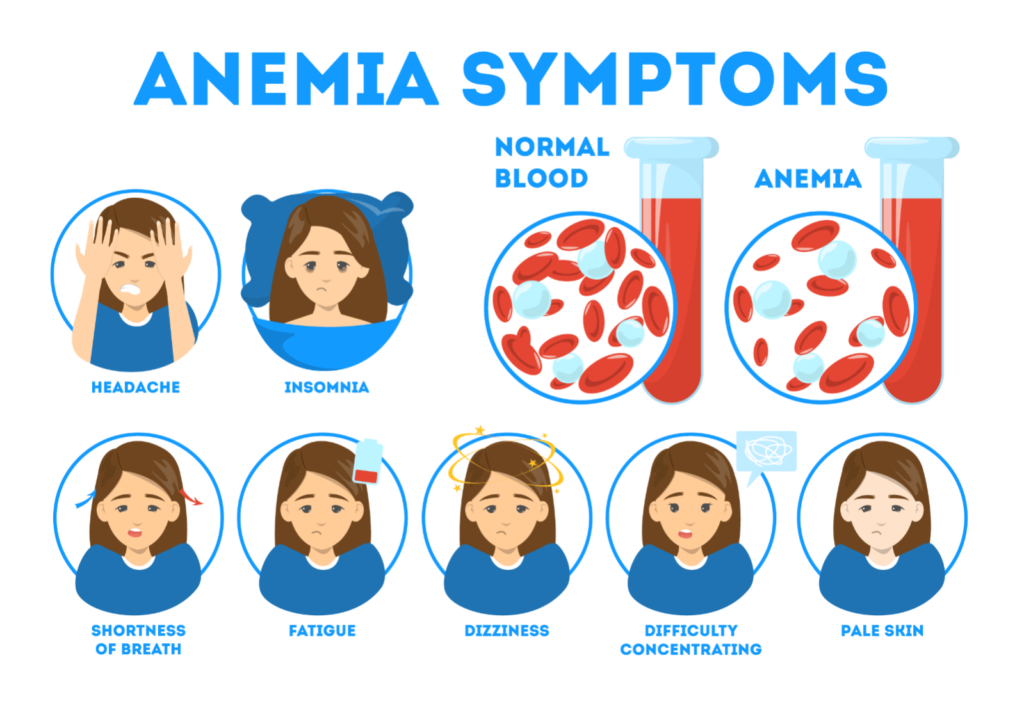
Anemia is a problem of not having enough healthy red blood cells or hemoglobin to carry oxygen to the body’s tissues. Hemoglobin is a protein found in red cells that carries oxygen from the lungs to all other organs in the body. Having anemia can cause tiredness, weakness and shortness of breath.
There are many forms of anemia. Each has its own cause. Anemia can be short term or long term. It can range from mild to severe. Anemia can be a warning sign of serious illness. Treatments for anemia might involve taking supplements or having medical procedures. Eating a healthy diet might prevent some forms of anemia.
Symptoms
- Tiredness
- Weakness
- Shortness of breath
- Pale or yellowish skin
- Irregular heartbeat
- Dizziness or lightheadedness
- Chest pain
- Cold hands and feet
- Headaches
- Frequent infections
Cause
Different types of anemia have different causes. They include Iron deficiency anemia. Too little iron in the body causes this most common type of anemia. Bone marrow needs iron to make hemoglobin. Vitamin deficiency anemia. Besides iron, the body needs folate and vitamin B-12 to make enough healthy red blood cells. A diet that doesn’t have enough of these and other key nutrients can result in the body not making enough red blood cells. Anemia of inflammation. Diseases that cause ongoing inflammation can keep the body from making enough red blood cells. Aplastic anemia. This rare, life-threatening anemia occurs when the body doesn’t make enough new blood cells. Anemias linked to bone marrow disease. Diseases such as leukemia and myelofibrosis can affect how the bone marrow makes blood. Hemolytic anemias. This group of anemias is from red blood cells being destroyed faster than bone marrow can replace them. Certain blood diseases increase how fast red blood cells are destroyed. Sickle cell anemia. This inherited and sometimes serious condition is a type of hemolytic anemia. An unusual hemoglobin forces red blood cells into an unusual crescent shape, called a sickle. These irregular blood cells die too soon. That causes an ongoing shortage of red blood cells.
Risk Factors
These factors can increase risk of anemia A diet that doesn’t have enough of certain vitamins and minerals. Not getting enough iron, vitamin B-12 and folate increases the risk of anemia. Problems with the small intestine. Having a condition that affects how the small intestine takes in nutrients increases the risk of anemia. Examples are Crohn’s disease and celiac disease. Menstrual periods. In general, having heavy periods can create a risk of anemia. Having periods causes the loss of red blood cells. Pregnancy. Pregnant people who don’t take a multivitamin with folic acid and iron are at an increased risk of anemia. Ongoing, called chronic, conditions. Having cancer, kidney failure, diabetes or another chronic condition increases the risk of anemia of chronic disease. These conditions can lead to having too few red blood cells. Slow, chronic blood loss from an ulcer or other source within the body can use up the body’s store of iron, leading to iron deficiency anemia. Family history. Having a family member with a type of anemia passed through families, called inherited, can increase the risk of inherited anemias, such as sickle cell anemia. Other factors. A history of certain infections, blood diseases and autoimmune conditions increases the risk of anemia. Drinking too much alcohol, being around toxic chemicals, and taking some medicines can affect the making of red blood cells and lead to anemia. Age. People over age 65 are at increased risk of anemia.
When to see a Doctor
Make an appointment with your health care provider if you’re tired or short of breath and don’t know why. Low levels of the protein in red blood cells that carry oxygen, called hemoglobin, is the main sign of anemia. Some people learn they have low hemoglobin when they donate blood. If you’re told that you can’t donate because of low hemoglobin, make a medical appointment.