
Cushing's Syndrome
What is Cushing's Syndrome ?
Cushing syndrome happens when the body has too much of the hormone cortisol for a long time. This can result from the body making too much cortisol, or from taking medicines called glucocorticoids, which affect the body the same way as cortisol.
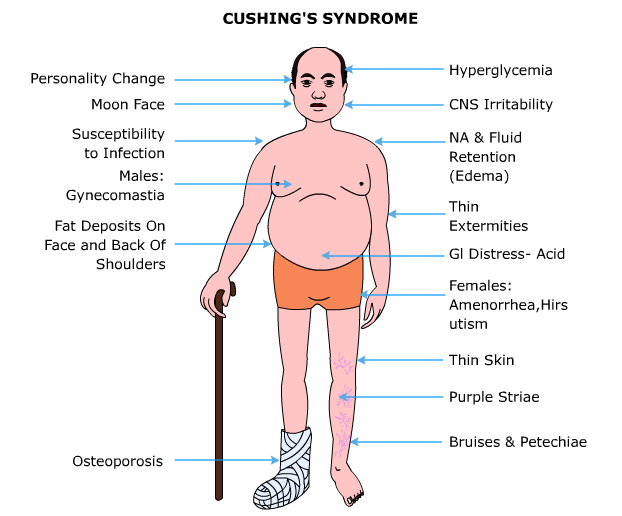
Too much cortisol can cause some of the main symptoms of Cushing syndrome — a fatty hump between the shoulders, a rounded face, and pink or purple stretch marks on the skin. Cushing syndrome also can cause high blood pressure or bone loss. Sometimes, it can cause type 2 diabetes. Treatments for Cushing syndrome can lower the body’s cortisol levels and improve symptoms. The sooner treatment starts, the better the chances for recovery.
Symptoms
- Rapid weight gain
- A red, round face
- Wounds that heal poorly
- High blood pressure
- Excessive hair growth or balding
- Purple stretch marks over the abdomen
- Easy bruising on the arms and legs
- General weakness and tiredness
- Blurry vision and dizziness
- Weak muscles and thinner arms and legs
- Libido changes and erectile dysfunction
- Stunted growth in children
Cause
Cushing syndrome is caused by having too much cortisol in the body. Cortisol is a hormone that is made in the adrenal glands. It helps the body respond to stress and plays many other important roles, including controlling blood pressure. Reducing inflammation. Helping the heart and blood vessels work correctly. Controlling blood sugar. Helping the body use food for energy.
Risk Factors
Cushing’s syndrome risk factors include high-dose use of glucocorticoid medications like prednisone, which are used to treat various conditions like asthma, rheumatoid arthritis, and autoimmune diseases. These medications mimic the effects of cortisol, a hormone produced by the adrenal glands. When the body is exposed to high levels of glucocorticoids for an extended period, it can lead to the symptoms of Cushing’s syndrome. A noncancerous tumor (adenoma) in the pituitary gland can cause it to produce too much adrenocorticotropic hormone (ACTH), which stimulates the adrenal glands to produce excess cortisol. Tumors in the adrenal glands themselves can also lead to the overproduction of cortisol. In rare cases, tumors in other parts of the body (e.g., lungs, pancreas) can produce ACTH, leading to Cushing’s syndrome. Some rare genetic conditions can increase the risk of developing Cushing’s syndrome. Cushing’s syndrome most commonly affects adults between 30 and 50 years old, but it can also occur in children. Women are affected by Cushing’s syndrome more often than men. A family history of certain genetic disorders can increase the risk. Previous exposure to radiation, such as radiation therapy for another medical condition, can also increase the risk of developing a pituitary tumor. Being overweight or obese, and having type 2 diabetes that is not under control, can increase the risk of developing Cushing’s syndrome. High blood pressure can also be a risk factor.
When to see a Doctor
Call your health care provider if you have symptoms of Cushing syndrome, especially if you’re taking glucocorticoid medicine to treat a health issue such as asthma, arthritis or inflammatory bowel disease.