
Hashimoto's Disease
What is Hashimoto's Disease ?
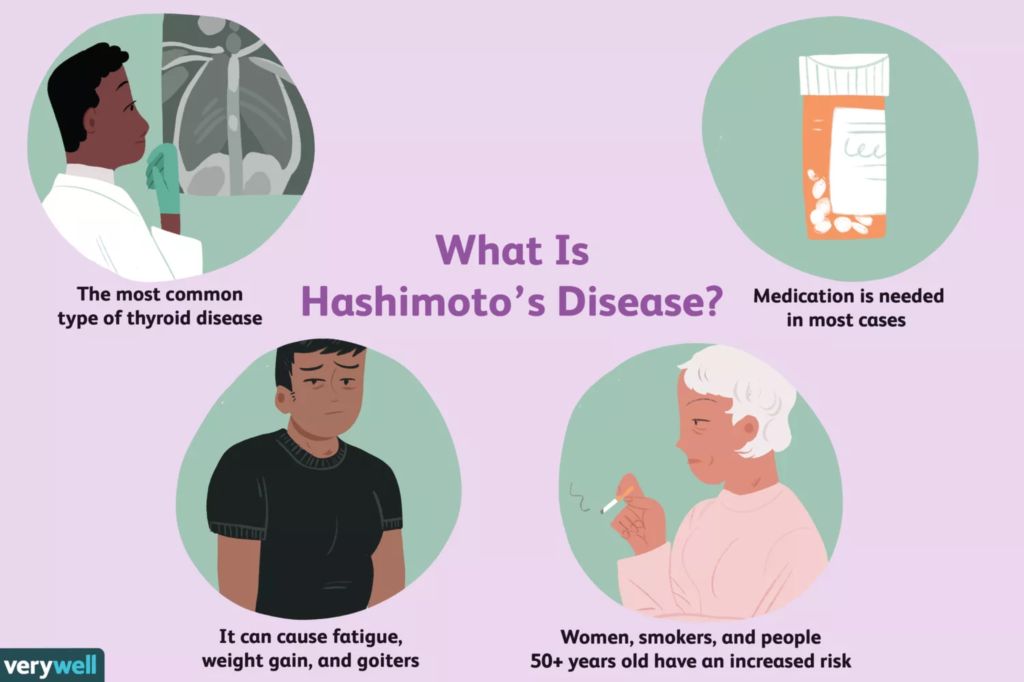
Hashimoto’s disease is an autoimmune disorder affecting the thyroid gland. The thyroid is a butterfly-shaped gland located at the base of the neck just below the Adam’s apple. The thyroid produces hormones that help regulate many functions in the body.
An autoimmune disorder is an illness caused by the immune system attacking healthy tissues. In Hashimoto’s disease, immune-system cells lead to the death of the thyroid’s hormone-producing cells. The disease usually results in a decline in hormone production (hypothyroidism). Although anyone can develop Hashimoto’s disease, it’s most common among middle-aged women. The primary treatment is thyroid hormone replacement. Hashimoto’s disease is also known as Hashimoto’s thyroiditis, chronic lymphocytic thyroiditis and chronic autoimmune thyroiditis.
Symptoms
- Fatigue and sluggishness
- Increased sensitivity to cold
- Increased sleepiness
- Dry skin
- Constipation
- Muscle weakness
- Muscle aches, tenderness and stiffness
- Joint pain and stiffness
- Excessive menstrual bleeding
- Depression
- Problems with memory or concentration
- Swelling of the thyroid (goiter)
- A puffy face
- Brittle nails
- Hair loss
- Enlargement of the tongue
Cause
Hashimoto’s disease is an autoimmune disorder. The immune system creates antibodies that attack thyroid cells as if they were bacteria, viruses or some other foreign body. The immune system wrongly enlists disease-fighting agents that damage cells and lead to cell death. What causes the immune system to attack thyroid cells is not clear. The onset of disease may be related to Genetic factors. Environmental triggers, such as infection, stress or radiation exposure Interactions between environmental and genetic factors
Risk Factors
The following factors are associated with an increased risk of Hashimoto’s disease Sex, Women are much more likely to get Hashimoto’s disease. Age, Hashimoto’s disease can occur at any age but more commonly occurs during middle age. Other autoimmune disease, Having another autoimmune disease — such as rheumatoid arthritis, type 1 diabetes or lupus — increases your risk of developing Hashimoto’s disease. Genetics and family history, You’re at higher risk for Hashimoto’s disease if others in your family have thyroid disorders or other autoimmune diseases. Pregnancy, Typical changes in immune function during pregnancy may be a factor in Hashimoto’s disease that begins after pregnancy. Excessive iodine intake, Too much iodine in the diet may function as a trigger among people already at risk for Hashimoto’s disease. Radiation exposure, People exposed to excessive levels of environmental radiation are more prone to Hashimoto’s disease.
When to see a Doctor
Signs and symptoms of Hashimoto’s disease vary widely and are not specific to the disorder. Because these symptoms could result from any number of disorders, it’s important to see your health care provider as soon as possible for a timely and accurate diagnosis.