
Bleeding During Pregnancy
What is Bleeding During Pregnancy ?
Vaginal bleeding during pregnancy can cause worry. But it isn’t always a sign of trouble. Bleeding in the first 12 weeks of pregnancy, also called the first trimester, is common. And most people who have bleeding during pregnancy go on to deliver healthy babies.
Still, take vaginal bleeding during pregnancy seriously. Sometimes bleeding during pregnancy could be a symptom of a miscarriage. Or sometimes bleeding might be a symptom of a condition that needs treatment right away. Learn about the most common causes of vaginal bleeding during pregnancy. Then you’ll know what to look for. And you’ll know when to contact your healthcare professional.
Symptoms
- Cervical Changes
- Miscarriage or Ectopic Pregnancy
- Subchorionic hematomas
- Hormonal Changes
- Placenta Previa
- Placental Abruption
- Vasa Previa
- Preterm Labor
- Infections
- Severe pain or intense cramping
Cause
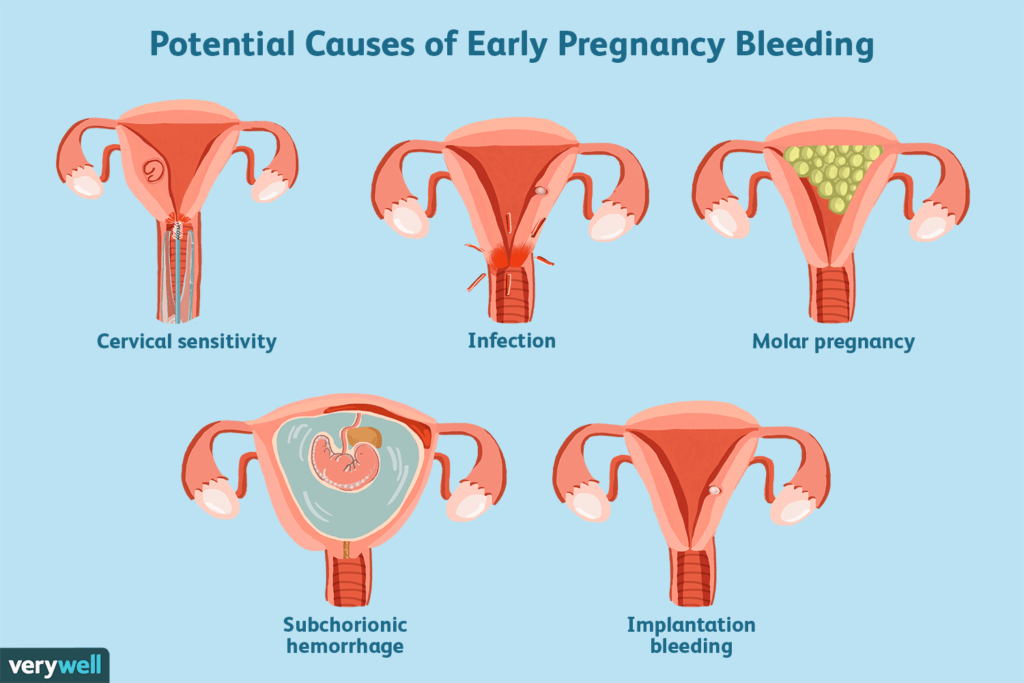
Bleeding or spotting in the first trimester is common. Between 15% and 25% of all pregnant women experience bleeding or spotting in the first 12 weeks of pregnancy. Even though it’s common, you should still call your healthcare provider to let them know. Some causes of bleeding in the first trimester of pregnancy are Implantation bleeding, Hormonal changes, Changes to your cervix, Ectopic pregnancy, Molar pregnancy, Subchorionic hematoma, Cervical polyps, Infection, Miscarriage, Placenta previa, Placental abruption, Preterm labor, Labor, Incompetent cervix, Bloody show, Sex, Pelvic exam or ultrasound, Pap test, Injury or trauma.
Risk Factors
Bleeding during pregnancy can have various causes, and depending on the stage of pregnancy and the severity of the bleeding, it can be a sign of a serious condition. Here’s a breakdown of potential causes and risk factors : Miscarriage, Ectopic Pregnancy, Implantation Bleeding, Subchorionic Hematoma, Infection, Hormonal Changes, Previous Miscarriages or Abortions, Placenta Previa, Placental Abruption, Vasa Previa, Cervical Changes, Preterm Labor, Advanced Maternal Age, Previous Cesarean Section, Multiple Pregnancies, Smoking, In Vitro Fertilization, Trauma, Bleeding Disorders.
When to see a Doctor
It’s important to report any vaginal bleeding during pregnancy to your health care provider. Be prepared to describe how much blood you passed, what it looked like, and whether it included any clots or tissue.